If you’ve ever held a weather seal that keeps a car’s cabin quiet during a rainstorm, a wire harness that stays flexible through a decade of engine heat, or a rubber component that prevents dust from seizing up a window regulator, chances are it came from our extrusion line. For 12 years, I’ve stood at the end of our silicone extrusion press, running my gloved fingers over every final product that rolls off, and listening to our automotive clients say two things: “This part holds up better than the last one” and “Why is silicone so much trickier to get right than regular rubber?” Today, I want to pull back the curtain on the automotive-grade requirements that turn a run-of-the-mill silicone extrusion into a part a car maker will trust for 150,000 miles—and why that’s non-negotiable for anyone supplying to the auto sector. Silicone Extrusion
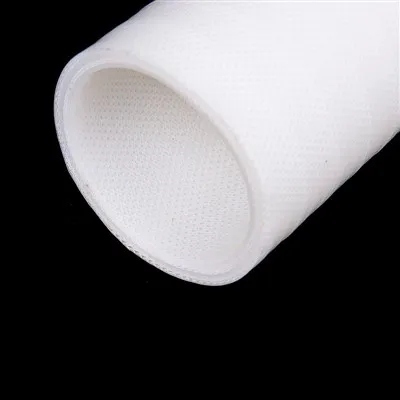
Let’s start with the most obvious, yet most often misunderstood: thermal performance. Automotive environments are not gentle. A wire harness tucked 2 inches from a turbocharger might see constant temperatures of 180°C, and spikes up to 220°C when the engine is under heavy load. A door seal on a pickup truck in Arizona summer? The surface of that rubber can hit 90°C on a 110°F day, and drop to -40°C in the Rockies by night. Silicone’s natural chemical structure makes it more heat-resistant than EPDM or natural rubber, but only if it’s formulated and extruded to hit strict automotive thermal specs.
Our team tests every batch of extrusion for thermal aging before it leaves the shop. We don’t just bake a sample for 72 hours at 150°C and call it done—we follow SAE J200, the standard for rubber aging in automotive applications, which requires samples to hold their elongation and tensile strength after 1,000 hours at 150°C. For under-hood parts, we go a step further: a 500-hour cycle at 200°C, with strength retention of at least 70% and elongation no less than 50% of the original. What does that mean for a client? Their wire harness won’t crack when the engine’s running hot, and their seal won’t become brittle and fall apart before the first oil change. We once had a client come to us because a European auto maker rejected a batch of under-hood wire seals from a competitor—their silicone was retaining only 52% elongation after 200 hours at 200°C. We adjusted our extrusion cure profile, added a small amount of phenyl silicone to boost high-temperature stability, and hit the 78% elongation mark on the first test run. That’s the work automotive extrusion requires, not just mixing silicone and pushing it through a die.
Next, there’s fluid resistance—and this is where so many general-purpose silicone extrusions fail. Cars are full of fluids: motor oil, coolant, brake fluid, gasoline, windshield washer fluid, and even road salt on the chassis. Silicone isn’t impervious to all of these; if it’s not formulated for specific fluids, it can swell, degrade, or lose its seal. For automotive applications, we have to meet SAE J189, the standard for rubber resistance to automotive fluids, and often additional specs from original equipment manufacturers (OEMs) like Ford, GM, or Tesla.
Take fuel system components, for example. If we’re extruding a grommet that seals a fuel line, it has to resist not just gasoline, but ethanol blends (E10, E85) that are more corrosive than traditional fuel. We test these parts by submerging samples in E85 for 70 hours at 40°C, measuring volume change, hardness shift, and tensile strength. General-purpose silicone might swell 15% in this test—enough to make a grommet too loose and leak fuel. Our automotive-grade silicone extrusions stay under 3% volume change. For brake fluid seals, we test against DOT 3 and DOT 4 brake fluid for 168 hours at 100°C; we’ve seen parts from unapproved suppliers soften by 15 durometer, making them too soft to create a tight seal on a brake line, while our parts stay within 2 durometer of their original hardness. This isn’t guesswork—every extrusion we make for auto is tested in our in-house lab, with records we can share in 24 hours if a client needs them for an OEM audit.
Then there’s compression set, a term that’s make-or-break for sealing parts. Compression set is how much a rubber part stays deformed after being squeezed for a long time. A door seal that compresses 50% after being shut for two weeks isn’t just annoying—it’s a failure: it won’t block wind noise or water, and it’ll let dust into the cabin. For automotive-grade silicone, the requirement is spelled out in ISO 815, which says that after being compressed 25% for 22 hours at 125°C, the compression set can’t exceed 20%. For parts that sit in cold climates, we also have a low-temperature compression set test: compressed 25% for 22 hours at -30°C, with a maximum set of 30%.
I learned this lesson early in my career. We had a small job making silicone seals for a fleet of work trucks; the client picked a cheaper silicone that only hit 28% compression set. Within a year, half the seals on the truck doors were leaking water when it rained. We replaced all of them at no cost, and that client never came back. Now, we hold our extrusion production to a strict 15% maximum compression set for all automotive sealing parts, and we document every single test. When an OEM comes in for a quality audit, they don’t just look at the final part—they pull our test records going back three years, and every batch meets the mark.
Surface finish and dimensional consistency are next, and these are the details that separate a good extrusion from one that gets rejected on the line. Auto parts are precise: a wire harness with a wall thickness that’s 0.1mm off won’t fit into the plastic clip it’s supposed to, and a window seal with a ridge that’s slightly uneven will rub against the glass and cause a squeak. For automotive silicone extrusions, dimensional tolerance is usually ±0.05mm for most cross-sections, and ±0.1mm for longer parts. Surface finish is equally important: parts for interior trim can’t have air bubbles, flow lines, or rough spots, because that’s visible to the customer. Under-hood parts might be hidden, but even they can’t have flaws that would cause stress cracks over time.
We invest in our extrusion dies and our inspection processes for this. Our dies are machined to aerospace-grade tolerances, not just generic tool steel, and we use a laser measuring system to check every 10th part off the line. For interior parts, we do a 100% visual inspection under bright lighting, and any part with even a tiny surface bubble is scrapped—no exceptions. Last year, we had a rush order for 5,000 window seals for a new SUV launch; a batch had a slight flow line along the edge that was only visible under a black light (a common trick we use for checking silicone flaws). We pulled all 5,000 parts, ran the extrusion line again, and got them to the client two days late, but they told us that’s why we’re their go-to supplier—we don’t cut corners when it matters.
Chemical purity is a requirement most people outside the industry don’t think about, but it’s critical. Auto interiors are closed spaces, and silicone parts can off-gas volatile organic compounds (VOCs) that cause the “new car smell” some people complain about, or even trigger allergies. For automotive-grade silicone, we have to meet VDA 278, the German standard for VOC emissions from interior materials, and often stricter OEM specs that limit aldehyde emissions (formaldehyde is a big one for interior parts).
Our silicone is formulated with food-grade additives for all automotive interior parts, no fillers that would leach chemicals. We test emissions in our lab every quarter, and last year we had a client who was switching to an electric vehicle line, requiring parts that had zero harmful emissions for a more sensitive cabin environment. We adjusted our curing process to remove all residual volatiles, and their test results came back 30% below the strictest OEM limit. That’s the difference between a supplier that just makes parts and one that understands the whole vehicle.
Curing is the final step that makes all these requirements possible, and it’s where so many extrusion shops mess up. Silicone curing (cross-linking) isn’t just heating the part until it’s rubbery—it’s a precise chemical reaction. Under-cured silicone won’t have the right thermal or fluid resistance, and over-cured silicone is brittle. For automotive extrusion, we use continuous vulcanization (CV) ovens, with tight temperature control along the entire length of the oven, so every inch of the extrusion cures evenly. We monitor the temperature every 30 seconds, and we test the cross-link density of every batch using a durometer and a solvent extraction test. If the cross-link density is too low, the part gets sent back for re-curing; if it’s too high, we adjust the oven temperature. No shortcuts here.
I know what some of you might be thinking: “This sounds expensive. Why not just use a regular silicone extrusion?” The answer is simple: cars are held to higher standards than almost any other product people buy. A toaster can break after two years, but a car is a $50,000 investment that people expect to last 10 or 15 years. The automotive-grade requirements for silicone extrusion aren’t arbitrary—they’re the minimum to make sure a part works as intended, safely, for that lifetime.
We’ve been supplying to auto manufacturers for 8 years now, and we’ve seen the industry shift toward more electric vehicles, which brings new requirements. EVs have higher under-hood temperatures because of battery systems, and new fluid systems like coolant for the battery. We’re currently working on a new formulation for battery seals that can handle 250°C for short periods, and resist the new dielectric coolants used in EVs. That’s the next challenge, and it’s why our team is always testing, adjusting, and refining our processes—because the auto sector doesn’t stand still, and neither do our requirements.

If you’re an automotive engineer, a procurement manager, or a design team looking for a silicone extrusion supplier that meets OEM standards, we’ve got the lab, the equipment, and the track record to deliver parts that don’t just pass tests, but last. We don’t cut corners, we document every step, and we work with you to adjust formulations and processes to meet your specific needs. If you’d like to discuss your project, run a test batch, or ask about our compliance with specific standards, reach out to our team today. We’re here to turn your part design into a reliable, high-performance component for the vehicles that hit the road every day.
Silicone Molded Products References
SAE J200, Rubber Materials: Laboratory Light Exposure and Heat Aging
SAE J189, Rubber Test Fluid for Automotive Applications
ISO 815, Rubber, vulcanized or thermoplastic—Determination of compression set
VDA 278, Determination of organic emissions from non-metallic materials
Dongguan Hengyue New Material Technology Co., Ltd.
As one of the most professional silicone extrusion manufacturers and suppliers in China, we also support customized service. We warmly welcome you to wholesale bulk cheap silicone extrusion from our factory. If you have any enquiry about quotation and free sample, please feel free to email us.
Address: Building 2, No. 3, Yindou Third Road, Qingxi Town, Dongguan City, Guangdong Province
E-mail: dghengyue@126.com
WebSite: https://www.hengyuesilicone.com/
