Hey there, let’s cut to the chase—if you’re a supplier of components like semiconductors, SMD resistors, or even tiny connectors, you’ve probably stared at your cover tape before and thought, “Why does this even matter beyond just sealing the reel?” Spoiler: gas permeability is one of the unsung superpowers of cover tape, and if you’re picking the wrong stuff, you could be looking at big headaches down the line. As someone who’s been in the cover tape game for over a decade (yeah, I’ve seen the bad takes), I’m gonna break this down like I would for a new customer on a coffee run—no stuffy jargon, just real stuff that matters. Cover Tape
First off, let’s define what gas permeability actually is for cover tape, ’cause not all permeability is created equal. In simple terms, it’s how easily gases (think oxygen, nitrogen, moisture vapor, even stuff like volatile organic compounds, or VOCs) move through the cover tape material. Wait, hold up—you might be like, “Cover tape’s supposed to seal stuff in, right?” That’s half true. It’s supposed to keep the bad stuff out, but sometimes you need the right amount of the good stuff, depending on what you’re packaging. If you mess this up, you’ll get components that oxidize mid-transit, or moisture that seeps in and ruins surface-mount tech (SMD) during reflow. Or worse—if you’re using desiccant-sealed reels, too little permeability and the desiccant can’t work properly to trap moisture that snuck in during manufacturing. That’s the kind of mistake that turns a $10k component run into landfill in a week.
Let’s get into the material specifics, ’cause that’s where permeability lives. Most cover tapes used in electronics packaging are either a single-layer film or a multi-layer laminate. The big ones are polypropylene (PP), polyethylene (PE), polyester (PET), and sometimes modified acrylic layers or metalized films (aluminum is super common here). Let’s run through each:
- Polypropylene (PP): Cheaper, flexible, but it’s pretty permeable to oxygen and moisture. Good for non-sensitive components—like cheap resistors that don’t mind a little air exposure. But if you’re packaging IC chips with gold-plated leads, even a tiny bit of oxygen can cause “gold embrittlement” over time. Not ideal for that.
- Polyethylene (PE): Similar to PP, a bit more moisture-resistant than PP, but still not great for high-sensitivity stuff. I’ve had customers use PE for through-hole parts before, but when they switched to SMD diodes, they started getting a 2% failure rate from oxidation. Turns out PE’s oxygen permeability is way too high for that.
- Polyester (PET): Stiffer, way less permeable than PP or PE. This is your go-to for mid-range components—like memory modules or small microcontrollers. It blocks most oxygen and moisture, but it’s not perfect. It’s also what we usually laminate with other layers to tweak permeability.
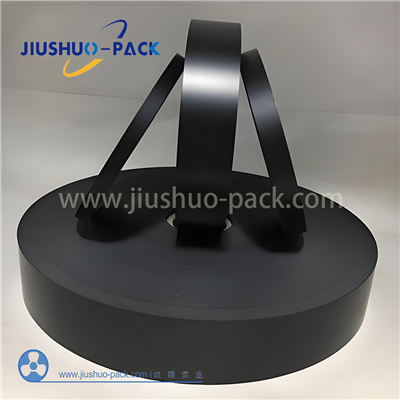
- Metalized cover tape (PET with a thin aluminum coating): This is the heavy hitter. The aluminum layer creates a near-barrier for almost all gases—oxygen, moisture, even VOCs. But here’s the catch: the thinner the aluminum layer, the more flexible it is, but the more permeable it becomes. Too thick, and you’ll have issues with the tape peeling cleanly from the carrier tape during pick-and-place (that’s a big no for assembly lines—sticking is a nightmare). We usually go with a 12-15 micron aluminum layer for most high-sensitivity jobs, balances barrier performance and pick-and-place reliability.
Now, why does this matter for you, the component supplier? Let’s use real examples from my work. Last year, a client of mine was shipping a batch of 0805 SMD capacitors to a medical device maker. They were using a generic PP cover tape and started getting a 3% failure rate after 3 months in storage. When they tested the gas permeability, the PP was letting in 0.8 cc of oxygen per square meter per day (that’s the standard unit we use, BTW—cc/m²/day at 23°C). The medical company’s specs required under 0.1 cc/m²/day to prevent capacitor degradation. So we swapped them to a metalized PET cover tape, got their permeability down to 0.07 cc/m²/day, and their failure rate dropped to zero. That’s the kind of win permeability can deliver.
Another angle: nitrogen purging. A lot of component reels are purged with nitrogen to displace oxygen, which stops oxidation. If your cover tape has high gas permeability, the nitrogen will leak out over time, and oxygen will seep in. How fast? For a PP cover tape, nitrogen permeability is almost the same as oxygen—so in a week, half the nitrogen is gone. For a metalized tape, it’s barely 5% loss in a month. That’s why when you’re storing components for long-term (like 6+ months), you can’t skimp on low permeability.
Wait, but here’s a myth I hear all the time: “Lower permeability is always better.” No, not even close. Sometimes you need a little gas movement. Let’s say you’re packaging components that have a small amount of flux residue on them. If your cover tape is too much of a barrier, the flux’s VOCs can get trapped inside the reel, build up pressure, and cause the cover tape to bubble or even pop open during shipping. That’s a disaster on the assembly line—you lose the entire reel. So for that, we’ll use a slightly permeable tape (usually 0.3-0.5 cc/m²/day) to let those VOCs escape slowly, without letting too much outside air in. It’s all a balance.
So how do we test permeability? It’s not just guesswork. We use standardized tests—mostly ASTM D3985 for oxygen transmission rate (OTR) and ASTM E96 for water vapor transmission rate (WVTR, which is how much moisture gets through). For our cover tapes, every batch is tested before it leaves our warehouse. We keep a log of every reel’s permeability data, so when a customer comes to us with a spec, we can pull the exact test results right away. No guesswork, no “should this work?”—just hard numbers.
Now, let’s talk about the stuff that actually affects permeability beyond the material itself. The thickness matters, duh—thicker films are less permeable, but they’re also harder to handle, more expensive, and can cause issues with the pick-and-place machine’s peel force (if the tape is too thick, the machine can’t peel it cleanly). The laminate structure too—if you have a multi-layer tape, the middle barrier layer (aluminum, for example) is the main player, but the outer layers (for heat sealing) don’t contribute much to permeability. That’s why we can tweak the outer layers to make the tape seal better to carrier tapes, without messing up the barrier.
Wait, and let’s not forget about storage conditions. If a customer stores our cover tape reels in a hot, humid warehouse, the permeability can shift a little. The plastic films can absorb moisture, which makes them more permeable. That’s why we always tell customers to keep our cover tapes in a cool, dry place before use—60-70°F, 30-50% humidity. It’ll keep the permeability consistent, so their components stay safe.
I get it, if you’re a component supplier, your plate is full—you’re dealing with lead times, part numbers, customer specs, and then you have to worry about cover tape permeability? It’s one more thing on the to-do list. But here’s the thing: choosing the right permeability isn’t just a box to check. It saves you money in the long run. You don’t have to deal with returns, rework, or angry customers because their components failed. Last quarter, one of our repeat clients saved $12k in rework costs just by switching to a cover tape with the right permeability for their LED components. That’s not small change.
So, let’s wrap this up. Gas permeability of cover tape isn’t some random tech spec—it’s a critical performance factor that directly impacts your component’s shelf life, reliability, and how it holds up during shipping and storage. It’s not just “sealing stuff”; it’s controlling what goes in and what comes out, balancing protection with functionality.
If you’re unsure what permeability level is right for your components—whether you’re packaging SMDs, semis, LEDs, or medical parts—hit us up to chat. We don’t do pushy sales pitches, we just give straight advice based on what’s worked for hundreds of other suppliers like you. We can even test a sample reel of your current setup to compare permeability, no cost, no strings attached. Just shoot us a message, and we’ll work through it together.
Plastic Reel References
ASTM D3985-21, Standard Test Method for Oxygen Gas Transmission Rate Through Plastic Film and Sheeting Using a Coulometric Sensor
ASTM E96/E96M-22, Standard Test Methods for Water Vapor Transmission of Materials
Electronics Packaging Handbook, 3rd Edition, Chapter 5: Flexible Packaging Materials for Electronic Components
International Electrotechnical Commission (IEC) 60601-1-11:2015, Medical Electrical Equipment – Part 1-11: General Requirements for Basic Safety and Essential Performance – Collateral Standard: Requirements for Medical Electrical Systems
Dongguan Jiushuo Industrial Co., Ltd.
As one of the most professional cover tape manufacturers and suppliers in China, we also support customized service. Please feel free to buy high quality cover tape made in China here from our factory. Contact us for more details.
Address: 11th Floor, Building 2, Chuangfu Center, Chashan Town, Dongguan City, Guangdong Province, China
E-mail: sales06@zaidaiw.com
WebSite: https://www.carriertape-pack.com/
