Hey everyone, if you’ve ever shopped for stainless steel plates—whether you’re a fabricator, a mechanic, or even someone tackling a big DIY project—you’ve probably seen the terms “annealed” and “pickled” thrown around a lot. At our stainless steel plate shop, we get questions about this every single day. Folks often mix these two processes up, or think they’re the same thing, but they’re totally different. Today, I’m breaking this down simple, no fancy jargon, just real talk from a guy who’s been selling stainless steel plates for over a decade. Let’s dive in. Stainless Steel Plate
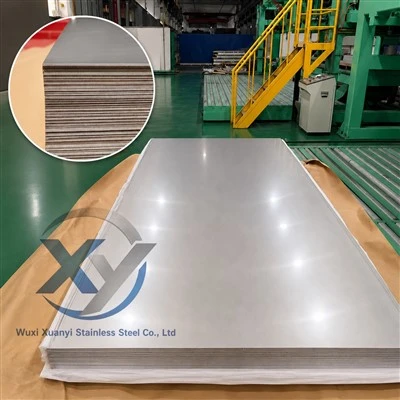
First off, let’s start with the basics: both annealing and pickling are post-production steps for stainless steel plates, right after the hot rolling, cold rolling, or whatever shaping process we do to turn raw metal into a flat plate you can actually use. But they do completely different things, target totally different issues, and give the plate totally different properties. I see so many customers pick the wrong one because they don’t get that, and that ends up costing them time and money—like last month, a local welder bought pickled plate when he needed annealed, and his parts kept cracking. Oops. Let’s not do that.
Let’s start with pickling, because that’s the one people usually stumble into first. When stainless steel is being made, especially when it’s hot formed (think: heating a big slab of metal and rolling it into a thin plate), it forms this yucky layer on the surface. It’s called scale, and it’s a mix of chromium oxides, iron oxides, and other crud that’s left over from the high-heat process. If you leave that scale on, it’s not just ugly—it’s bad for the metal’s main superpower: corrosion resistance. Stainless steel works because of that thin chromium oxide layer on the surface, but scale messes that up. It creates gaps where rust can start, and makes the plate harder to weld, too—welders hate scale because it causes spatter and weakens the weld. That’s where pickling comes in.
Pickling is a chemical process, not a heat process (wait, let me confirm that—yeah, mostly chemical, sometimes combined with a light heat step called “bright pickling,” but the core is acid). We submerge the plate in a pickling solution—usually a mix of nitric and hydrofluoric acids, but we’ve got food-safe options too for guys working on kitchen equipment—and the acid eats away all that surface scale. It also etches the top layer a little, which is actually good because it helps restore that proper chromium oxide layer the metal needs. Once the pickling’s done, we rinse the plate super thoroughly to get all the acid off, and then sometimes we do a passivation step (another chemical treatment) to make sure that corrosion-resistant layer is strong.
What does a pickled stainless steel plate look like? Smooth, shiny, uniform—no dull spots or that grayish scale haze. It’s also way easier to clean, weld, and paint if you need to. But here’s the catch: pickling only fixes the surface. The internal structure of the metal? It’s still the same as before—hard, maybe a little brittle, with what metallurgists call “internal stresses” from the forming process. So pickled plate is great for things like outdoor signs, food processing equipment, or parts that get cleaned a lot, but it’s not the best if you’re bending it a lot or welding big parts that need to flex. Which brings us to annealing.
Annealing is a heat process, plain and simple, and it’s all about fixing that internal structure, not just the surface. When stainless steel is rolled into a plate, especially cold-rolled (thinner plates rolled at room temp to get precise dimensions), the metal molecules get all tangled up, right? It’s like crumpling a piece of paper over and over—those bends and twists make the metal hard, stiff, and prone to cracking if you try to shape it further. Internal stresses also build up, which can cause warping later when you’re machining or welding the plate. Annealing fixes all that.
How does it work? We heat the stainless steel plate up to a specific temperature—usually around 1900°F (1040°C) for most common grades like 304 or 316—and hold it there for a little while, long enough for the molecules to rearrange themselves into a neat, orderly structure. Then we cool it down really slowly (that’s the key part—fast cooling would mess it up again). The result? The metal gets way softer, more ductile (meaning it bends without cracking), and those internal stresses are gone. It’s like taking that crumpled paper and carefully unfolding it so it’s flat and flexible again.
Wait, but what about the surface when annealing? Oh, right—when you heat stainless steel that hot in open air, it forms its own oxide layer, not the nice, uniform chromium oxide layer from pickling. That layer is thicker, darker, and more uneven—sometimes called “heat tint” or “mill scale.” So annealed plate isn’t shiny like pickled plate when it comes out of the furnace. That’s where a lot of people get confused: you can have annealed plate that’s been pickled, but not pickled plate that’s been annealed? No, wait, no—they’re separate steps. Some people do both: anneal first to soften the metal for shaping, then pickle after to get rid of the heat tint from annealing. But you don’t have to—sometimes annealed plate is sold just as-annealed, with that darker, matte surface.
Let’s break down the key differences in plain terms, not metallurgy textbook stuff, because I know most of you don’t care about crystal structures—you care about what this means for your project. First, purpose: pickling = surface fix, get rid of scale, improve corrosion resistance on the outside, make it easier to work with the surface. Annealing = internal fix, soften the metal, remove stresses, make it workable for bending, deep drawing, welding big parts. Second, process: pickling = chemical, acid bath, no high heat that rearranges molecules. Annealing = high heat, slow cool, no acid involved. Third, appearance: pickled = shiny, uniform, smooth. Annealed = matte, darker (unless it’s bright annealed, which is a special process done in a protective gas to keep it shiny, but that’s more expensive and less common for standard plates). Fourth, performance: pickled = good surface corrosion resistance, but hard, brittle, prone to cracking when shaped. Annealed = soft, flexible, no stress, great for forming, but the surface needs extra care if you want corrosion resistance (unless you pickle it after).
Let me give some real-world examples so you can see when to use which. Last year, a guy called us needing plate for his new boat’s railings—he had to bend the plate into curved sections, and weld multiple parts together. We told him he needed annealed plate, not pickled. Why? Because pickled plate is too hard to bend without cracking, and the welding would put too much stress on the hard metal, leading to broken welds. He got annealed, bent it perfectly, and the welds held up through two seasons of saltwater. Another example: a local bakery needed stainless steel countertops. Pickled plate was perfect for that—they didn’t need to bend it, they just needed a smooth, easy-to-clean surface that wouldn’t rust when they spill batter or cleaning chemicals. Annealed would have been overkill here, and more expensive.
Wait, what about grades? Does this matter for different stainless steel types like 304 vs 316? Nope, the process is basically the same for all austenitic stainless steels (which are the most common, 304, 316, etc.). Ferritic or duplex stainless steels might have different annealing temps, but the difference between annealing and pickling still holds. We always make sure to note the grade and the process clearly on every product page, so our customers don’t mix them up.
Another common question: can you turn a pickled plate into an annealed plate? Technically, yeah—you can send it back through the annealing furnace. But why would you? Pickling is a surface step, so if you already have a pickled plate, the surface is fine, but the internal structure is still hard. Annealing would soften it, but you’d lose that nice shiny surface until you re-pickle it. That’s extra work, extra cost, so we always recommend getting the right one first.
Wait, what about the cost? Annealed plate is usually a little more expensive than pickled, right? Because the heat processing takes time and energy, and some grades might have to be annealed under protective gas to avoid bad surface layers. Pickling is cheaper because it’s a simple chemical bath, no fancy equipment. That’s another thing to factor in—if you don’t need the flexibility of annealed, going with pickled saves you a few bucks.
Let’s talk about common mistakes I see. First, someone buying pickled plate for a project that needs shaping. Like the welder I mentioned earlier—he bought pickled, tried to bend it into a frame, and half the pieces cracked. He had to send them back, wait for annealed, and lost a week of work. Second, someone buying annealed plate and thinking it’s got the same corrosion resistance as pickled. If it’s just as-annealed, that heat tint layer is not as corrosion-resistant as the pickled surface, so they have to pickle it themselves after, which adds time and cost. Third, mixing up “bright annealed” and “pickled.” Bright annealed is a special annealing process done in a nitrogen or hydrogen atmosphere to prevent oxidation, so it’s shiny—looks a lot like pickled, but it’s still softer, more flexible. I always tell customers to check the product description: if it says “bright annealed,” it’s flexible, just shiny, not pickled.
At our shop, we make sure every listing has a clear section on the process: whether it’s pickled, annealed, or both, what grade it is, and recommended uses. We also have a team that’ll help you pick the right one if you’re not sure—no pressure, just honest advice. Last week, a small construction company owner called, wasn’t sure between annealed and pickled for their outdoor handrails. We asked them: are you bending the plate? Welding long sections? They said yes, so we recommended annealed, with a note that they could do a light pickle after installation to boost surface corrosion resistance. That saved them from a costly mistake.
Wait, let’s recap to make sure this is clear, no confusion:
- Pickled stainless steel plate: Surface-only treatment, removes scale, shiny, smooth, good corrosion resistance on surface, hard/inflexible, best for flat, non-shaped parts.
- Annealed stainless steel plate: Heat treatment, softens metal, removes internal stress, flexible, good for bending/welding/shaping, matte or needs additional pickling for corrosion resistance.
That’s it. It’s really not that complicated once you separate surface vs internal properties. The biggest takeaway: ask yourself two questions first. 1) Do I need to bend, shape, or weld this plate heavily? If yes, go annealed. 2) Do I just need a flat, smooth, corrosion-resistant surface with no shaping? If yes, pickled.
If you’re still unsure, don’t guess—reach out to us. We’re not just a stainless steel plate supplier; we’ve been in this game long enough to know what works for almost any project, big or small. Whether you’re a seasoned fabricator who knows exactly what you need, or a first-time DIYer tackling your first big build, we’re here to help you get the right plate, no extra costs, no headaches. Shoot us a message, tell us about your project, and we’ll hook you up with the perfect stainless steel plate for the job.
Hot Rolled Carbon Steel REFERENCES
- ASM International. (2005). Metallurgy and Properties of Stainless Steels. ASM Handbook Volume 9: Metallography and Microstructures.
- Davis, J. R. (Ed.). (1994). Stainless Steels: ASM Specialty Handbook. ASM International.
- Nickel Institute. (2021). Stainless Steel Processing: Heat Treatment and Surface Finishes. Technical Report No. NI 2021-04.
Wuxi Xuanyi Stainless Steel Co., Ltd.
Wuxi Xuanyi Stainless Steel Co., Ltd. is one of the most professional stainless steel plate manufacturers and suppliers in China. With abundant experience, we warmly welcome you to wholesale bulk durable stainless steel plate made in China here from our factory. If you have any enquiry about cooperation, please feel free to email us.
Address: 1207-1208, Building 11, Shengang Metropolis Plaza, No. 299 Fangcheng Avenue, Xinwu District, Wuxi City,China.
E-mail: jscherryxy@163.com
WebSite: https://www.xuanyisteel.com/
