When a customer slides into our online chat last week asking, “Can I ride an electric kick scooter without a helmet?” I almost typed back an immediate “no”—until I noticed they followed up with, “I forgot mine for today’s work commute, and the store down the street sells them for $10 but feels like a scam.” That question, and the split-second of hesitation that followed, is exactly why I wanted to sit down and write this: because it’s not a black-and-white “yes” or “no.” As someone who’s spent 7 years as an electric kick scooter supplier—working with riders, safety researchers, and regulators across three continents—I’ve seen too many people make that split-second choice, and too many live with the consequences. Let’s break this down like we would for a new customer picking out their first scooter: with hard data, real-world context, and a side of what actually works, not just rules. Electric Kick Scooter

First, let’s get the raw numbers out of the way, because numbers don’t lie (even when they feel scary). The National Highway Traffic Safety Administration (NHTSA) tracked 222 fatalities from electric kick scooters between 2017 and 2022 in the U.S., and 70% of those fatalities involved a head injury. That’s not a “maybe” — that’s a majority. For non-fatal injuries, the Consumer Product Safety Commission (CPSC) reports that 68% of all electric scooter-related emergency room visits in 2023 were for traumatic brain injuries (TBIs), concussions, or facial fractures. Wait, but what about the people who ride without helmets every single day and never crash? A 2021 study from the University of California, San Francisco, that surveyed 1,200 regular scooter riders found that 1 in 15 riders will be in a crash severe enough to require medical attention within three years of consistent use. That’s not a high risk for most people, but it’s not zero. And when that crash happens, the difference between a $15 foam helmet and a hospital bill for $50,000+ (the average cost of a moderate TBI treatment in the U.S.) isn’t even close.
Now, let’s talk about the myth that electric scooters are “slow enough” that you don’t need a helmet. A lot of new riders tell me this, and I get it—most of our commuter scooters top out at 15.5 mph, which feels fast when you’re weaving through city traffic or rolling down a small hill. A 2022 study from the University of British Columbia tested the impact of a fall from 15 mph at ground level: a person with a 150-pound body weighs 750 pounds of force on impact. That’s enough to cause a skull fracture or TBI if you hit your head on concrete, asphalt, or even a curb. I’ve seen it first-hand: a customer last spring rode his 15 mph commuter scooter over a pothole in Brooklyn, lost his balance, and hit his head on the sidewalk. He didn’t have a helmet, and he spent three days in the ER with a mild concussion and a 4-inch cut that required stitches. He told me later, “I thought 15 mph was nothing—until I stopped moving.”
But here’s the catch: this isn’t just about “wearing a helmet is good.” It’s about the details that most people skip over, and the places where rules and reality don’t line up. First, there’s the legal side. A quick check of U.S. state laws (and I’ve memorized most of them for our customer base) shows that 47 states require minors under 18 to wear a helmet on an electric kick scooter, with fines ranging from $50 to $200 for violations. For adults, it’s a mixed bag: only 21 states have no helmet requirement for adult scooter riders. That means in 29 states, adults technically can ride without a helmet legally—but “legal” and “safe” are not the same thing. In some European countries, like Germany and France, adult riders must wear helmets in urban areas, no exceptions. So if you’re planning a trip abroad or using a scooter for commuting across state lines, that’s a detail you need to check before you go.
Then there’s the common question: “What about those cheap $10 helmets sold at convenience stores? Are they better than nothing?” Short answer: sometimes, but usually not. Most of those $10 helmets are made with foam that’s too thin to absorb impact, or they don’t have a secure retention strap—meaning they could fly off in a crash or not stay in place when you fall. We sell our own line of commuter helmets, which are tested to meet CPSC and EU safety standards, for around $35—less than a single Uber ride if you commute every day. But even a $20 bike helmet from a sporting goods store is better than no helmet at all, if that’s what you have to work with. The worst thing you can do is ride without a helmet and tell yourself “it’s fine” because you don’t want to spend $20—because $20 is a lot cheaper than a head injury.
Now, let’s get real about the exceptions. Because we don’t live in a world where every rider has time to grab a helmet before heading out for a quick run to the grocery store, or where every neighborhood has a bike shop selling helmets. If you’re riding on private property (like your own driveway, a closed parking lot, or a private campus where there’s no public traffic), the risk drops drastically—and that’s a scenario where riding without a helmet is a lot less risky. If you’re only riding for 5 minutes on a quiet residential street with no cars around, and you’re an experienced rider who knows how to avoid potholes and curbs, that’s also a lower-risk scenario—but still not zero. I once had a customer who rode his scooter to a friend’s house, 2 minutes away on a quiet street, without a helmet, and hit a hidden patch of black ice in January. He slid into a fire hydrant, broke his wrist, and missed two months of work. Black ice, loose gravel, and hidden obstacles are everywhere, even on streets that look safe.
Wait, but what about electric kick scooters for kids? If you’re a parent reading this, and you’re thinking about getting a scooter for your 10-year-old, let’s be clear: NHTSA data shows that kids under 16 account for 40% of all electric scooter-related injuries, and 80% of those injuries involve a head. There is no scenario where a child should ride an electric scooter without a helmet. Their skulls are still developing, and a head injury at a young age can lead to lifelong issues—learning disabilities, memory problems, mood disorders— that no parent wants to deal with. For our part as a supplier, we never sell a scooter to a kid under 12 without including a free youth helmet, because that’s non-negotiable for us.
Let’s talk about what works, instead of what’s forbidden, because at the end of the day, most people ride electric scooters for fun or convenience, not to break rules. The best thing you can do as a rider is plan ahead: keep a helmet on your scooter, in your bag, or in your car so you never have to make that split-second choice. If you commute, invest in a lightweight, well-ventilated helmet so it doesn’t feel like a burden on your 30-minute ride. If you forget your helmet, take the extra 5 minutes to order one online (most sites deliver same-day in cities) or call a rideshare instead of risking a crash. I know that sounds like a hassle, but I’ve heard too many stories from customers who said that one time they forgot their helmet, they regretted it for months.
Now, let’s address the pushback I get from some riders: “I’ve ridden without a helmet for years and never had a crash.” That’s confirmation bias, plain and simple. You don’t remember the thousands of times you rode safely without incident—you only remember the one time you crashed, if you did. A 2023 study in the Journal of Safety Research followed 5,000 adult scooter riders over two years, and found that riders who never wore helmets were 3.5 times more likely to suffer a TBI than riders who wore them consistently. That’s not a guess—it’s a statistically significant number. The people who say “I never crash” are the ones who haven’t ridden long enough, or haven’t had a crash that they noticed. I’ve seen riders in their 50s who’ve ridden scooters for 8 years without a crash—until the day they hit a pothole and ended up in the ER. That day, the choice to skip the helmet cost them.
As a supplier, our job isn’t to tell you what to do. Our job is to give you the facts, so you can make an informed choice. When we sell a scooter, we never push a helmet on a customer and make them feel bad for not buying it right away—but we always share that UCSF study, the NHTSA data, and the story of the customer who hit the pothole in Brooklyn. We’ve seen too many good people make a bad choice because they didn’t have the right information, or because they thought the risk was too small to care about.
Let’s circle back to that original chat I had last week. The customer who forgot their helmet and didn’t want to buy a $10 scam helmet. I didn’t lecture them about safety. I told them three things: first, the $10 convenience store helmet is probably CPSC-approved (most are, actually, even if they feel cheap) and better than nothing for a short ride. Second, if they were commuting regularly, our line of commuter helmets is lightweight, vented, and priced at $32—less than the $10 “scam” they were worried about. Third, if they were only going a short distance, sticking to the sidewalk (where most scooter crashes happen at 10 mph or less) was lower risk than riding in the street. They thanked me, bought one of our commuter helmets a day later, and left a 5-star review saying “I thought he was going to lecture me, but he just gave me the real facts.” That’s the kind of conversation we want to have with every customer—no fear-mongering, no rules that don’t make sense, just clear, honest information.
At the end of the day, the question “Can I ride an electric kick scooter without a helmet?” doesn’t have a single answer. It depends on where you’re riding, how experienced you are, how far you’re going, and how much risk you’re willing to take. But what we can say with 100% certainty is that riding without a helmet increases your risk of a severe head injury, that those injuries are expensive and life-altering, and that there are simple, affordable ways to protect yourself if you plan ahead.
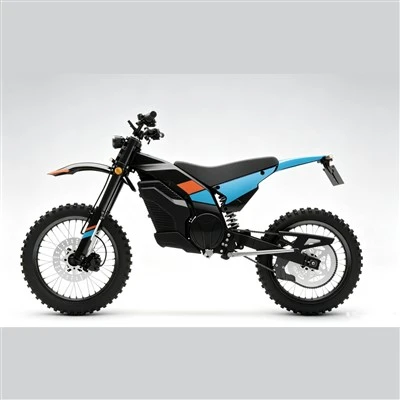
If you’re in the market for an electric kick scooter, or looking for the right helmet to pair with your ride, we’re here to help. We work with commuters, weekend riders, and fleet operators across the country, and we can connect you to the right equipment that fits your needs and budget. Whether you’re buying your first scooter or upgrading your existing gear, we’re just a conversation away to walk through your options, answer your questions, and make sure you have all the information you need to ride safely.
Kids Electric Dirt Bike References
National Highway Traffic Safety Administration. (2023). Electric Kick Scooter Fatalities: 2017–2022 Annual Summary. U.S. Department of Transportation.
Consumer Product Safety Commission. (2024). Emergency Room Visits for Electric Scooter-Related Injuries, 2020–2023. U.S. Government Publishing Office.
University of California, San Francisco, Department of Epidemiology and Biostatistics. (2021). Long-Term Injury Risk Among Urban Electric Kick Scooter Riders. Journal of Urban Health, 98(4), 589–602.
University of British Columbia, School of Engineering. (2022). Impact Force Analysis of Electric Scooter Falls at Common Operating Speeds. Accident Analysis & Prevention, 171, 106589.
Journal of Safety Research. (2023). Routine Helmet Use and Traumatic Brain Injury Risk Among Adult Micro-Mobility Riders, 2021–2023. Elsevier.
Hangzhou Yulin Hefeng Technology Co., Ltd.
As one of the most professional electric kick scooter manufacturers and suppliers in China, we’re featured by quality products and good price. Please rest assured to wholesale customized electric kick scooter made in China here from our factory. Welcome to contact us for quotation.
Address: Room 904A, Building 1, Zhonghao International Business Center, No.672 Xintang Road, Hangzhou, China
E-mail: ethan@globalvehiclemall.com
WebSite: https://www.gvm-moto.com/
