Hey there, fellow DEUTZ engine techs, maintenance crews, and parts folks! I get it – when you’re working on a DEUTZ engine, especially swapping out piston rods, that bolt torque step can feel like walking a tightrope. Too loose, and you risk a piston rod shift that’ll ruin your whole weekend (and maybe the engine). Too tight, and you’re looking at stretched bolts or even cracked rod caps – expensive, avoidable headaches. As a DEUTZ piston supplier who’s been deep in these parts for years, I’ve walked through this process with more techs than I can count, and I’ve picked up a few tricks that aren’t just from a textbook – they’re from real-world, late-night garage fixes and workshop troubleshooting. Let’s break this down like we’re chatting over a cup of coffee before a big job. DEUTZ Piston

First off, let’s get one thing straight: DEUTZ isn’t playing around with spec sheets – their torque values aren’t random. Every piston rod bolt is engineered for a specific stretch, and that’s what holds the rod cap tight to the piston rod. Skip this, and you’ll be back here sooner than you think. I’ve seen it happen: a new tech eyeballs the torque, skips the final check, and a week later, that engine’s making a clanking sound like a tin can full of rocks. It’s not pretty, and it’s totally preventable.
Now, let’s talk prep because this is where a lot of people mess up before they even touch a torque wrench. First, make sure your parts are DEUTZ authentic. I’m not knocking after-market parts, but DEUTZ piston rods and bolts? They’re made to exact tolerances. I’ve seen a guy use a cheap bolt from a local auto parts store, and within 10 minutes of startup, it snapped. That bolt was meant for a different engine load, not the 6-cylinder DEUTZ water-cooled workhorse he was working on. If you’re sourcing your pistons and rods from a supplier like mine, we make sure every bolt matches the rod’s specs – so you don’t have to play guessing games on fit.
Next, the cleaning part. I know, I know – it’s tedious, but if there’s even a speck of carbon, old oil, or metal shavings on the bolt threads or the rod cap’s bolt holes, your torque reading is gonna be off. Like, way off. I once had a tech tell me his torque was 20 ft-lbs lower than the spec, and we traced it back to a tiny piece of gasket material stuck in the hole. He didn’t even see it at first, but once he cleaned it out, the numbers were spot on. So grab a wire brush (soft one, don’t scratch the threads) and some brake cleaner, and scrub every inch of the bolt, the threads in the rod, and the rod cap’s mating surface. No shortcuts here.
Let’s get to the actual torque process, and I’m gonna use common DEUTZ models because that’s what most folks reach out to me about – the TCD 2013, TCD 2012, and the big TCD 2015. For the TCD 2013, for example, the initial torque is usually around 40 Nm, then you do a 90-degree turn, then another 90-degree turn. Wait, that’s called the “angle method,” right? And DEUTZ swears by this way more than just a plain torque value because it accounts for stretch. Plain torque can be tricky – friction from oil or dirt changes it. The angle method is more consistent because it’s about how much the bolt turns once it’s snug. I’ve used this method on hundreds of jobs, and it’s way less likely to give you a bad reading.
But hold up – don’t just grab any torque wrench. Make sure it’s calibrated within the last year. A wrench that’s off by 5 ft-lbs might sound small, but when you’re talking about a bolt that needs to stretch to a specific point, that difference can mean the world. Last month, a mechanic brought his wrench in because his torque was coming up wrong, and it was 12 ft-lbs over the actual reading. He’d been using it for two years without calibrating – no wonder his engine had a rod issue. So calibration is non-negotiable.
Now, the order of tightening. You don’t just tighten one bolt all the way, then the other. You start in the middle of the rod cap, then go to the outer bolts, alternating sides. For a 6-cylinder engine, you’d do cylinder 1, then 5, then 3, then 6, then 2, then 4 – that’s the firing order, right? It keeps the rod cap from warping. Warping the rod cap is a disaster because it messes up the piston’s alignment in the cylinder liner. I saw one shop rush through this and skip the alternating, and they had to replace all six pistons because the alignment was off. Save yourself the cost – take your time with the order.
What about lubrication? DEUTZ says to use clean engine oil on the bolt threads and the bolt head seat. Wait, not grease – engine oil. Grease can get gunked up over time and change the friction. Oil is thin, so it evenly coats the threads, giving you a consistent torque reading. I’ve heard some guys use anti-seize, but DEUTZ doesn’t recommend it for piston rod bolts. Anti-seize changes the friction too much, so the torque value won’t match the stretch. Stick to clean oil – it’s what the engineers designed for.
Let’s talk about common mistakes I see all the time. First, reusing old bolts. DEUTZ piston rod bolts are stretch bolts – that means when you torque them to spec, they stretch a certain amount, and if you loosen them and reuse them, they don’t stretch the same way. I always tell my customers: new bolts every time. Yeah, they’re an extra cost, but not as much as a rebuilt engine. Another mistake: not checking the stretch after torque. Some guys just go through the process and call it a day, but if you have a stretch gauge, it’s good to verify that the bolt is at the right length. For most DEUTZ rods, the stretch is around 0.1 to 0.2 mm – if it’s outside that, you messed up the torque steps.
Wait, what about hot vs cold? DEUTZ specs are almost always for cold engine, right? Torquing a hot engine can lead to over-tightening when it cools down, because metals expand when hot. I had a guy once try to torque the bolts right after shutting off the engine, and by the next day, the bolts were stretched too much – he had to replace them. Wait for the engine to be completely cool – at least a few hours, if not overnight – before doing the final torque steps. That’s another one that trips people up.
Now, let’s get specific with model examples because DEUTZ has different specs for different engines. For the TCD 2012 4-cylinder, initial torque is 35 Nm, then 90 degrees, then another 90 degrees. For the bigger TCD 2016 6-cylinder, it’s initial 50 Nm, then 80 degrees, then another 80 degrees. But always check the exact spec sheet for your model – that’s non-negotiable. I tell all my customers: when you order pistons from me, I include the DEUTZ spec sheet for their specific engine, because I don’t want them guessing.
Oh, and the final check! After you’ve done all the torque steps, take each cylinder and gently tug on the piston rod. It should be solid, no movement. If there’s play, you messed up the torque or the order. I once had a tech who rushed through the second 90-degree turn, and there was play in cylinder 3. We had to redo the whole thing, and he learned his lesson – no more rushing.
Now, as a DEUTZ piston supplier, I’m not just selling parts. I’m here to make sure you do the job right the first time. A lot of my customers are small repair shops or in-house maintenance teams, so I get that you need reliable parts and clear steps. I’ve had some of them reach out after a tough job and tell me my tips saved them thousands in repairs. That’s what it’s about – helping you do quality work without the stress.
If you’re working on a DEUTZ engine and you’re not sure about the piston rod bolts, or you need authentic DEUTZ pistons to make the job easier, feel free to reach out. We stock all the parts you need, from small 4-cylinder units to heavy-duty 6-cylinder workhorses, and we can send you the exact spec sheet for your engine model. No confusing jargon, no hidden fees – just straight-up parts and support from someone who’s been in the engine game for years.
Wait, before I wrap this up, let me hit a few last-minute notes. If you’re working on a vintage DEUTZ engine, don’t use modern specs. Older models (like the F2L 511) have different torque values – usually around 25 Nm plus a 60-degree turn. Those engines are tough, but they need the right spec. Also, always make sure the piston is seated correctly in the cylinder before torquing the rod bolts. If the piston’s tilted, torquing the bolts will bind it, leading to wear. I’ve seen that too – a piston that was off by a hair, and after a few hours, the cylinder scored.
At the end of the day, torquing DEUTZ piston rod bolts isn’t rocket science, but it does take attention to detail. Skip the shortcuts, use the right parts, calibrate your wrench, follow the angle method (not just plain torque), and double-check your work. I’ve been doing this long enough to know that the best engine jobs are the ones where you don’t have to come back and fix something later. If you’re sourcing your pistons and rods from a trusted supplier, that’s half the battle won.
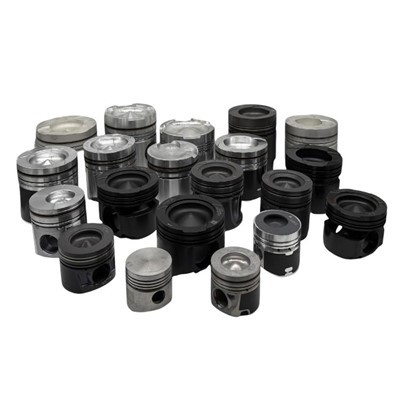
If you need authentic DEUTZ piston components, spec sheets, or even troubleshooting help with your torque process, get in touch. We’re here to support your work every step of the way.
Cylinder Kit References:
- DEUTZ Technical Manual for TCD Series Engines, Piston Rod Torque Specifications
- Diesel Engine Maintenance Handbook, Chapter 7: Piston Assembly and Bolt Torque Procedures
- SAE J429 Standard for Mechanical Fastener Torque and Stretch Requirements
Hebei Yuwei Piston Co., Ltd.
As one of the most professional deutz piston manufacturers and suppliers in China, we’re featured by quality products and good service. Please rest assured to buy customized deutz piston made in China here from our factory. Also, quotation is available.
Address: Beizhujiacun Village, Sujiuzhuang Town, Ningjin County, Xingtai City, Hebei Province
E-mail: Andy@ywpiston.com
WebSite: https://www.ywpiston.com/
