If you’ve ever walked into a busy café, grocery store, or restaurant and noticed a commercial refrigerator that feels a little “off” — doors that don’t seal quite right, uneven cooling, or parts that seem to wear out faster than they should — chances are good the unit isn’t level. As a commercial refrigeration equipment supplier who’s worked with hundreds of foodservice operators over the past 12 years, I can tell you this isn’t a trivial issue. Too many business owners dismiss a wobbly fridge as a minor inconvenience, but the truth is: leveling your commercial refrigerator isn’t just a recommendation — it’s a critical part of keeping your equipment running efficiently, saving you money, and extending its lifespan. Today, I want to break down why that level matters, the science behind it, and what can happen when you skip this simple, often-overlooked step. Commercial Refrigeration Equipment
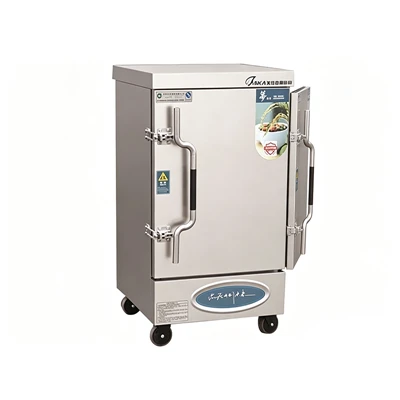
First, let’s start with the basics of how a commercial refrigerator works. Unlike a residential fridge, which is built for a single family’s needs, commercial units are designed for 12+ hours a day of heavy use: they’re stuffed with hundreds of cases of inventory, doors slammed open and shut dozens of times an hour, and compressors running at peak output to maintain consistent temperatures. At the core of every refrigeration system is a refrigeration cycle: a compressor pumps refrigerant through a closed loop, where it absorbs heat from the inside of the unit and releases it outside. For this cycle to work as intended, every component — especially the evaporator coils inside the fridge, the condenser coils outside, and the compressor itself — has to be positioned correctly. That means the entire unit needs to sit perfectly level, both side-to-side and front-to-back.
Let’s talk about the evaporator coils first, because that’s where a lot of cooling happens in the fridge’s interior. Evaporators are designed to be sloped slightly (usually 1/8 inch per foot of length) toward a drain pan at the bottom. This small slope lets condensation, which forms naturally as warm air hits the cold coils, flow consistently away from the coils and out through the drain line. If the fridge is too far from level, that condensation won’t drain properly. It can pool on top of the coils, freeze into a thick block of ice, and block airflow. When ice builds up on evaporator coils, the fridge has to work twice as hard to cool the air — and that translates to higher utility bills. I’ve seen this happen dozens of times: a small deli owner in downtown Chicago called me last year saying her reach-in fridge’s electric bill jumped 30% in six months. When our service team arrived, we found a thick layer of ice on the coils from the fridge being tipped back just enough that condensation couldn’t drain. We leveled it, cleared the ice, and her bill dropped back to normal within a month. That’s not a one-time fix — that’s a mistake that cost her thousands of dollars over six months, all because a single adjustment of the feet was off by less than half an inch.
Then there’s the door seal. A commercial refrigerator’s door is only as effective as its gasket — that flexible rubber seal along the door’s edge that keeps cold air in and warm air out. If the unit isn’t level, the door won’t align perfectly with the frame. Even a tiny gap (1/16 of an inch is enough) can let warm air leak in. For every 1 degree of temperature increase inside the fridge, the compressor has to run for 10% longer to bring it back down to set point. Multiply that by 10 hours a day, 30 days a month, and you’re looking at major energy waste. Worse, if the door is misaligned, the gasket will wear unevenly. The side that’s pressed too hard against the frame will crack or degrade faster, while the side with a gap will let in even more warm air. Eventually, you’ll have to replace the entire gasket — a $150 to $300 part, plus labor, that could have been avoided entirely with a quick level check. I once worked with a grocery chain in Atlanta that had 20 under-counter fridges; their maintenance team was replacing three gaskets a month. After we did a routine level check on all units, that number dropped to zero. That’s the kind of small adjustment that adds up to big savings for a business.
Now, let’s talk about the compressor and other internal components. Commercial compressors are heavy, powerful machines that are mounted on springs or rubber mounts to absorb vibration from daily use. If the fridge isn’t level, the compressor sits at an angle that it wasn’t designed for. Over time, that can cause the internal parts of the compressor to wear unevenly. The pistons, valves, and crankshaft inside the compressor are precision-engineered to operate when aligned with gravity. When they’re tilted, oil flow inside the compressor can be disrupted. Refrigeration compressors rely on oil to lubricate moving parts and prevent overheating. If the fridge is too far off level, oil can pool on one side of the compressor, leaving other parts under-lubricated. That leads to friction, overheating, and eventually, compressor failure — one of the most expensive repairs for a commercial refrigeration unit. I’ve seen compressors die in as little as two years because of improper leveling, while a properly leveled unit can last 10 to 15 years with regular maintenance. That’s a difference of thousands of dollars in replacement costs.
You might be thinking: “My floor isn’t perfectly flat, so why does leveling matter?” The good news is, commercial refrigerators are designed to be adjustable, with feet on each corner that let you tweak the height to compensate for uneven floors. Most operators don’t realize that this is part of the installation process, not just a nice add-on. When we install a new commercial unit, we always use a bubble level (or even a laser level for larger units) to check both side-to-side and front-to-back. We adjust each foot until the unit is perfectly aligned, and then test the door to make sure it closes evenly, the condensation drains properly, and the compressor runs smoothly. For older units, a quick level check is one of the first things our service team recommends when a fridge is acting up. It’s a 10-minute job that can prevent hours of repairs and thousands in energy costs.
Another common myth I hear: “Leveling doesn’t matter for chest-style freezers, only reach-in fridges.” That’s not true either. Chest freezers have their own set of issues with leveling. Condensation can still build up on the interior coils, and if the unit isn’t level, the lid might not seal tightly. Warm air seeps in, causing frost buildup that can make the lid hard to open and force the compressor to work overtime. Even walk-in coolers, which are built into a space, need to be level. The floor of the walk-in has to be sloped slightly toward a drain, and the walls and ceiling panels need to be aligned to ensure the doors seal correctly. A walk-in that’s off level can lead to the same energy waste and component wear as a reach-in fridge, just on a larger scale.
So, what’s the right way to level a commercial refrigerator, if you’re doing it yourself? First, make sure the unit is empty — a full fridge is harder to move and level, and the weight of inventory can hide unevenness. Unplug it (or turn off the power for the unit) to avoid any risk of electrical shock. Place a level on the top shelf, side to side, and adjust the front feet until the bubble is centered. Then move the level to the front of the unit, along the length, and adjust the back feet until the bubble is centered. Finally, test the door: open it, then let it close on its own. It should seal evenly all around. If it sticks on one side or gaps, you might need to adjust the feet a little more. For larger units, like reach-ins or walk-ins, it’s always better to have a professional do the leveling, because they can use more precise tools and check for issues like drain line flow and compressor alignment that a standard bubble level can’t catch.
Now, let’s talk about the cost of not leveling. I’ve had operators come to me with a fridge that’s only three years old, with a dead compressor, and they’re shocked when we tell them improper leveling is the cause. The average cost of a new commercial compressor is $1,200 to $2,500, plus labor to install it — that’s a big bill for something that could have been prevented with a $5 level and 10 minutes of work. On top of that, higher energy bills add up over time. A 2021 study by the Department of Energy found that commercial refrigerators that are not level use 15 to 25% more energy than properly leveled units. For a small restaurant with two fridges, that’s an extra $30 to $50 a month on utilities — $360 to $600 a year. For a grocery store with 20 fridges, that’s $7,200 to $12,000 a year in wasted energy. That’s money that could go toward restocking inventory, hiring staff, or expanding your business.
I also want to mention that after installation, you should check the level of your refrigerator every few months, especially if it’s in a high-traffic area or the floor has any give (like in a space with old wood floors). Moving heavy items in and out of the fridge can shift the feet slightly, and over time, even small vibrations from the unit’s operation can throw the level off. A quick check every quarter takes less than a minute, and it’s way easier to fix a small shift before it causes major problems.
As a commercial refrigeration equipment supplier, I’ve seen firsthand how small details like leveling can make or break a business’s bottom line. Too many operators focus on the initial cost of the fridge, or the latest features, and overlook the maintenance steps that keep it running efficiently. Leveling isn’t glamorous, but it’s one of the most impactful things you can do to extend the life of your equipment and save money long-term. If you’re dealing with a fridge that’s using too much energy, has sticky doors, or needs frequent repairs, the first step isn’t to call for a compressor replacement — it’s to check if it’s level.
If you’re in the market for a new commercial refrigerator, or you need service or maintenance for your existing unit, our team can help. We offer installation services that include proper leveling for all units, routine maintenance checks, and repairs to keep your equipment running at peak efficiency. Don’t let a small leveling issue turn into a costly breakdown — reach out to our team to discuss your commercial refrigeration needs today.
Commercial Refrigeration Equipment References
American Society of Heating, Refrigerating and Air-Conditioning Engineers (ASHRAE). 2020. “Commercial Refrigeration Installation Standards.” ASHRAE Journal, vol. 62, no. 8, pp. 45-52.
U.S. Department of Energy. 2021. “Energy Efficiency Improvements for Commercial Refrigeration Equipment.” Office of Energy Efficiency and Renewable Energy.
Refrigeration Service Engineers Society (RSES). 2019. “Basic Commercial Refrigeration Maintenance Guide.” RSES International.
Food Marketing Institute. 2022. “Grocery Store Refrigeration Best Practices for Cost Reduction.” FMI Technical Report Series.
Zhejiang Anneng Kitchen Equipment Co., Ltd.
As one of the most experienced commercial refrigeration equipment manufacturers and suppliers in China, we also accept customized order. With abundant experience, we warmly welcome you to wholesale advanced commercial refrigeration equipment in stock from our factory. For quotation, contact us now.
Address: No. 1003 Donghai Avenue, Taizhou Bay New Area, Taizhou City, Zhejiang Province
E-mail: 13968527240@163.com
WebSite: https://www.annengkitchen.com/
