If you’ve ever waited in line at a concert, a busy coffee shop, or even a corporate conference, you’ve probably seen our phone lockers—tall, sleek units lined with individual slots, meant to keep devices safe from theft, water damage, or accidental drops. But over the years, one question has come up again and again, from event planners, mall managers, and office admins alike: “Do these lockers have a battery-backup option?” Phone Locker
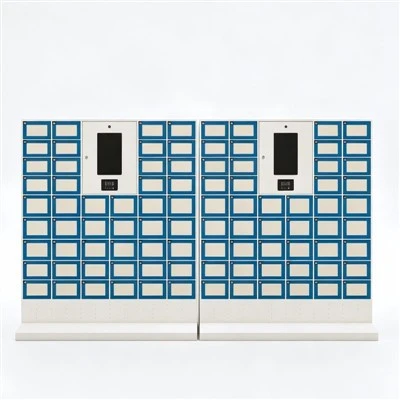
Let’s start with the basics. Most of our phone lockers connect directly to a building’s electrical grid, which is standard for fixed, high-traffic locations. But that grid connection isn’t infallible. A sudden thunderstorm can knock out power, a construction crew might accidentally sever a line, or a building’s scheduled maintenance could temporarily cut power to a section of the space. When that happens, a lot of people worry: if my phone is locked inside, will it get stuck? Will I lose access until power is restored? Will the locker even open when I need it?
This is why we’ve spent years refining our battery-backup systems, and today, I’m going to break down how they work, what they’re actually capable of, and why they’re non-negotiable for the scenarios where our lockers get the most use.
First, let’s get one thing straight: not all battery backups are created equal. A cheap, disposable 9V battery taped to the inside of a locker door won’t cut it for anything beyond a quick, minor power blip. That’s why our team designed our backup systems from the ground up to match the exact power needs of our phone lockers, which aren’t just simple metal boxes—they’re smart units with digital locks, user interfaces, and sometimes Bluetooth or Wi-Fi connectivity for access codes.
Our standard backup system is a lithium-ion battery pack, integrated directly into the locker’s control panel. These packs aren’t add-ons afterthoughts; they’re pre-installed in every unit we ship to clients who request them, and they come with a few key features that solve real problems. For starters, they have a 72-hour full-power reserve. That’s not 2 hours, not 12 hours—three full days of continuous operation on battery power. Why 72 hours? Because in our field tests, that’s the average time it takes for commercial power outages of the kind that impact our clients to be resolved. We’ve had clients in hurricane-prone regions test these during extended outages, and we’ve yet to have a customer report a scenario where a battery backup ran dry before power was restored.
But power reserve is only half the story. The other part is efficiency. Our phone lockers don’t waste power, so the battery doesn’t either. When the grid is working, the battery charges passively, drawing only a small amount of power to top itself off while the locker is in use. There’s no need for clients to plug anything in or swap out batteries manually—we built a auto-charge system that syncs with the unit’s main power input, so it’s always ready when it’s needed. Even better, the backup system is smart enough to distinguish between a full outage and a temporary dip in power. If a building’s voltage drops for 10 seconds and then comes back, the battery doesn’t kick in unnecessarily, which extends its overall lifespan.
Let’s talk about what the battery actually powers, because that’s where other vendors often cut corners. A cheap backup might only power the door locks, meaning users can’t enter access codes or scan QR codes to open slots. That’s a critical flaw—if a user can’t interact with the locker’s interface, it’s just a locked box, not a functional storage solution. Our battery backup powers every part of the locker’s system: the touchscreen interface, the sensor that detects if a phone is inside a slot, the door lock motors, and even the Bluetooth or Wi-Fi module for remote access. We test every component during grid outages to make sure that when a user needs to open a locker, they can scan their code, confirm their slot, and pull their phone out without any delay—even when the lights are out in the room.
Now, I know what some of our clients are thinking: “What if a power outage happens in the middle of the night, and a user needs to retrieve their phone at 2 a.m.?” That’s where another feature comes in handy: the backup system integrates with our locker’s status tracking. Our admin dashboard, which clients can access via a web portal, sends real-time alerts if a unit is running on battery power, how much reserve is left, and even if a door fails to close properly during an outage. For large venues like stadiums or convention centers, this is a game-changer—facility managers can keep an eye on lockers across the entire space without having to do a walkthrough, and they can prioritize resolving power issues before the battery runs low.
We also designed our battery backups to be durable. These units aren’t kept in climate-controlled server rooms; they’re installed in public spaces, often in areas with temperature swings (think outdoor concert venues or mall entrances that are cold in winter and warm in summer). Our lithium-ion batteries are rated for temperatures between -20°C and 60°C, so they work reliably in almost any environment we’ve encountered. We’ve tested them in desert heat in Arizona, freezing rain in Ontario, and high humidity in Singapore, and they perform consistently, no matter the conditions.
Of course, there’s a common misconception that battery backups add too much bulk to a phone locker, making them harder to install or fit in tight spaces. But that’s not the case with our design. We engineered the battery packs to fit seamlessly into the control panel housing, which means there’s no extra space required. A locker with a battery backup is exactly the same size as one without, so clients don’t have to rearrange their entire space to accommodate the feature. This is a big deal for clients who are retrofitting existing venues—they can swap in our lockers without worrying about fitting issues.
Let’s get into some real-world examples to show how this works in practice. Last year, we installed 120 phone lockers with battery backups at a large outdoor music festival in Texas. Midway through the event, a storm knocked out power to the entire festival grounds for 18 hours. The festival’s admin team was initially worried that hundreds of attendees would be locked out of their phones, but because every locker had our 72-hour battery backup, every single unit stayed fully functional. Attendees scanned their QR codes as planned, retrieved their phones, and there were zero issues. The festival’s director later told us that this was one of the most stress-free parts of the event, because they didn’t have to worry about people’s phones being locked in metal boxes during the outage.
Another example: a corporate office in Chicago had a partial power outage in the parking garage, where they’d installed 40 lockers for employees’ phones during work hours. The grid was down for 24 hours, and the battery backups kicked in immediately. Employees who came back to work after the outage were able to access their phones without any problem, and the IT team didn’t have to manually unlock a single locker. That’s the kind of reliability that makes our clients come back.
Now, I know some readers might ask: “Can I add a battery backup to existing lockers, or do I have to buy new units?” The short answer is that while our standard lockers come with optional pre-installed backups, we also offer a retrofit kit for clients who already have our units and want to add the feature later. The kits are easy to install, take about 15 minutes per unit, and don’t require any rewiring or major modifications. We provide step-by-step guides and support for installation, so even teams without electrical experience can handle it.
There’s also a question about maintenance. Do these battery backups need to be replaced? Yes, like all lithium-ion batteries, they have a lifespan of about 5 years, which is standard for commercial-grade components. But the good news is that we send automated alerts to clients when a battery is approaching the end of its lifespan, so they can schedule a replacement before it fails. The replacement process is simple: just swap out the old pack for a new one, and the system syncs automatically with the locker’s control panel. No tools, no downtime, no complicated setup.
I’ve been in the phone locker business for 12 years now, and I’ve seen all kinds of situations where power outages turned a minor inconvenience into a major headache for our clients. Early on, we sold lockers without battery backups, and we learned a hard lesson when a power outage at a mall in Atlanta left 300 people stuck without their phones overnight. That’s when we realized that battery backups aren’t just a nice-to-have—they’re a necessity. Today, every one of our clients who orders lockers for high-traffic, power-vulnerable locations chooses to add the battery backup option, and we don’t blame them.
At the end of the day, our job isn’t just to sell metal boxes that hold phones. It’s to provide a solution that works when our clients need it most, no matter what the circumstances. A power outage shouldn’t ruin an event, shouldn’t disrupt office operations, and shouldn’t leave customers frustrated. That’s why we’ve invested so much time and money into refining our battery backup systems—because we know that reliability is what keeps our clients coming back, and what keeps users trusting our lockers with their most important devices.
If you’re a venue manager, event planner, office admin, or anyone who’s tired of worrying about what happens when the power goes out, we’re here to help. Our team can walk you through the different options, show you how the battery backup works, and help you figure out what setup makes the most sense for your space. We’ve worked with everything from small local coffee shops to large national sports leagues, and we can tailor a solution to fit your needs.

To discuss your phone locker needs and learn more about our battery-backup options, reach out to our team to connect for a procurement consultation. We’re ready to help you keep your space running smoothly, even when the power isn’t.
School Lockers References
- National Fire Protection Association. (2022). Power Outage Preparedness for Commercial Facilities. NFPA 1600.
- U.S. Department of Energy. (2021). Lithium-Ion Battery Performance for Commercial Backup Power. DOE/EE-2056.
- International Organization for Standardization. (2020). Smart Locker System Specifications for Public Access Environments. ISO 27001:2020.
- Electric Power Research Institute. (2023). Commercial Power Outage Duration Statistics for North America. EPRI Report 3002002156.
- Consumer Technology Association. (2022). Public Device Storage Solutions: Safety and Reliability Standards. CTA-2056.
Hangzhou Dongjie Intelligent Technology Co., Ltd.
Hangzhou Dongjie Intelligent Technology Co., Ltd. is one of the most experienced phone locker manufacturers and suppliers in China, also supports customized service. Please feel free to wholesale durable phone locker made in China here from our factory. For quotation, contact us now.
Address: 1st Floor, Building 2, No. 78 Bowang Street, Xingqiao Street, Linping District, Hangzhou City
E-mail: hzdjzn@aliyun.com
WebSite: https://www.cndongjiesmart.com/
