When I first started building face grinding machines back in 2008, I thought spindle speed was just a number on a spec sheet—something customers checked once and ignored if other features looked good. Over the years, I’ve learned it’s the quiet backbone of every face grinding job that comes through our workshop. Last month, a customer brought in a batch of stainless steel hydraulic valves for off-road equipment; they were having constant surface finish issues and uneven material removal, even with the same abrasive wheels and feed rates we’d recommended. The problem? Their existing machine’s spindle speed was calibrated wrong—too slow for their 12-inch diameter workpiece, which caused the abrasive grains to clog and left micro-scratches on every part. That’s when it hit me: spindle speed isn’t a secondary setting. It’s the first thing to lock in before you even touch a workpiece. Face Grinding Machine
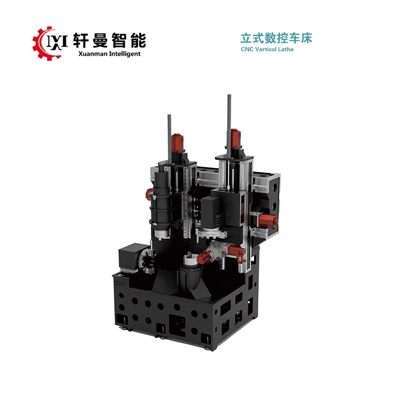
Let’s break this down in terms anyone who’s worked with face grinding can relate to. Face grinding is unique because it grinds the entire face of a flat workpiece, distributing force across the whole surface instead of a small contact point like peripheral grinding. The spindle is the shaft that holds the grinding wheel, spinning at a specific RPM to make that wheel interact with the workpiece. Get the speed right, and the wheel cuts cleanly, removes material evenly, and lasts longer. Get it wrong, and you’re looking at scrap parts, higher tooling costs, and production delays that eat into profits.
First, think about abrasive grain behavior. When a grinding wheel spins, each tiny grain on its surface hits the workpiece at a certain velocity. That velocity (which is RPM multiplied by the circumference of the wheel, a formula that’s second nature to us as machine suppliers) is what determines how the grain penetrates the material. For ductile materials like aluminum or mild steel, a moderate speed works well—think 1,500 to 3,000 RPM for a 14-inch wheel. But if you’re grinding hard materials like titanium or hardened tool steel, you need faster speeds: 4,000 to 6,000 RPM. Why? Hard materials need sharp, aggressive cuts, and faster speeds make the grains bite deeper instead of just rubbing and smearing the material. That smearing is what causes residual stress in the workpiece, which can lead to part failure down the line.
I saw this firsthand with a customer in the aerospace industry. They were grinding titanium turbine disks at 1,800 RPM, and every batch had to be heat-treated afterward to relieve stress. When they switched our machine’s spindle speed to 4,500 RPM, they cut the post-grinding heat treatment step by 60%, saving them over $120,000 a year. That’s the kind of impact getting spindle speed right has.
But it’s not just about material hardness. Workpiece size plays a huge role too. The larger the diameter of the workpiece, the lower the spindle speed needs to be. A 20-inch cast iron workpiece? You don’t want it spinning at 5,000 RPM—there’s too much centrifugal force, which can cause the workpiece to wobble, leading to uneven grinding. Wobble is a killer for face grinding: it leaves high spots and low spots, and even a 0.001-inch variation means the part doesn’t meet tolerance. For small workpieces, like medical implants (some as small as 2 inches), you can crank the speed up—up to 10,000 RPM sometimes—because centrifugal force isn’t a problem, and faster speeds give a finer finish.
Another point: wheel compatibility. Not every grinding wheel works at every speed. Bond strength matters here. If you have a resin-bonded wheel, it can’t handle high speeds because the bond might break, sending abrasive grains flying. Vitrified-bond wheels, on the other hand, hold up better at high speeds, which is why we recommend them for our high-speed spindle machines. Our tech team tests every wheel we supply for maximum safe RPM, and we make sure our machines’ spindles can handle that safely—no customer wants a wheel disintegrating mid-job. That’s why we include a spindle speed calibration tool with every machine; it takes the guesswork out of matching wheel and speed.
Surface finish is where spindle speed really shines. I’ve seen a customer go from a 32 Ra finish to 8 Ra just by bumping spindle speed up 1,000 RPM, without changing the wheel or feed rate. Here’s why: at the right speed, each abrasive grain removes a tiny chip instead of rubbing the surface. Smaller chips mean less surface damage, fewer scratches, and a smoother final product. If speed is too low, the grains don’t cut cleanly—they plow through the material, leaving tiny gouges that show up as a rough finish. If speed is too high, the grains can’t penetrate deep enough, so they just slide over the surface, creating heat that discolors the workpiece. That’s a double whammy: bad finish plus material damage.
Now, let’s talk about practical challenges. Spindle speed doesn’t exist in a vacuum. You have to balance it with feed rate, workpiece rigidity, and machine power. A machine with a weak spindle can’t maintain high speeds under heavy loads, so if a customer tries to push speed too high, they’ll get spindle deflection, which ruins accuracy. That’s why we design our face grinding machines with rigid spindle housings—they can hold speed consistently even when grinding hard materials. We also include variable speed controls, so customers can adjust on the fly for different jobs, instead of being stuck with a fixed speed.
I once had a customer who insisted on using a fixed-speed machine because it was cheaper, but their production kept failing tolerance checks. We swapped in one of our variable-speed spindles for their existing machine, and their tolerance went from 0.002 inches to 0.0005 inches in the first week. That’s the kind of return on investment that makes talking about spindle speed worth it.
Another common mistake: ignoring the effect of speed on tool life. When spindle speed is matched to the wheel and material, the wheel’s abrasive grains don’t clog as much. Clogged wheels force you to dress them more often, which adds time to production and wears out the wheel faster. A customer grinding mild steel told us their wheel life went from 50 parts to 150 parts after adjusting spindle speed and using the right wheel. That’s less money spent on new wheels, less downtime for dressing, and higher output.
Let’s wrap this up with a real-world example from our own workshop. Last quarter, we had a job for automotive brake rotors. The customer wanted a flat, smooth face for optimal braking performance. We set the spindle speed at 2,200 RPM, matched to their 12-inch vitrified wheel and cast iron workpiece. The result: a 16 Ra finish, consistent flatness within 0.0008 inches, and 120 parts per hour—exactly what they needed. If we’d gone to 3,500 RPM, we would have had too much heat, warping the rotors. If we’d stayed at 1,200 RPM, the wheel would have clogged in 20 parts, leading to more scrap. That balance is the secret.
At the end of the day, spindle speed is a foundational parameter in face grinding, not an afterthought. It affects finish, tolerance, tool life, production speed, and part quality. For anyone working with face grinding machines, taking the time to calibrate spindle speed to their specific job will save them money, reduce downtime, and deliver better parts.

If you’re struggling with surface finish, tool wear, or tolerance issues in your face grinding operations, let’s connect. We’ve worked with everything from aerospace components to automotive parts, and we can help you get your spindle speed dialed in—so you can stop dealing with avoidable scrap and start hitting your production goals. Reach out to our team to discuss your specific needs, and we’ll walk you through how our face grinding machines can support your process.
CNC Turning Machine References
- Marchesini, G., & Remino, C. (2018). Effect of spindle speed on surface integrity in face grinding of aerospace alloys. Journal of Manufacturing Processes, 31, 542-551.
- Rowe, W. B. (2014). Principles of Modern Grinding Technology (2nd ed.). William Andrew Publishing.
- Jain, V. K., & Zagid, A. (2020). Centrifugal force effects in high-speed face grinding of large workpieces. International Journal of Machine Tools and Manufacture, 155, 103578.
- American Society of Mechanical Engineers (ASME). (2019). Standard for Surface Grinding: Spindle Speed Calibration. ASME B74.1.
Jiangsu Xuanman Intelligent Equipment Co., Ltd.
We’re well-known as one of the leading face grinding machine manufacturers in China, featured by quality products and low price. Please rest assured to buy discount face grinding machine made in China here from our factory. We also accept customized orders.
Address: No. 1-1, Weier Road, Jieji Equipment Manufacturing Industrial Park, Sihong County, Suqian City, Jiangsu Province, China
E-mail: jsxmzn@163.com
WebSite: https://www.xm-cnc.com/
