If you’ve ever worked with a fully automatic hot press welding machine, you know these aren’t just pieces of industrial equipment—they’re the backbone of consistent, high-quality welds for everything from packaging materials to automotive components, filters, and medical devices. As a supplier of these machines, I’ve spent the last 12 years walking alongside customers who bought their first automatic hot press and later came back frustrated because they skipped simple maintenance steps that keep these systems running for decades instead of a few years. I’ve seen brands that run their machines 24/7 to meet demand and others that only use theirs a few times a week, but one thing holds true no matter the volume: the difference between a machine that delivers perfect welds every cycle and one that’s breaking down weekly boils down to intentional, routine maintenance. This isn’t about complicated engineering degree work—it’s about small, consistent checks that take 10 minutes a day and a full hour each month, and I’m sharing everything I’ve learned from supporting hundreds of customers to keep their fully automatic hot press welding machines in peak condition. Fully Automatic Hot Press Welding Machine
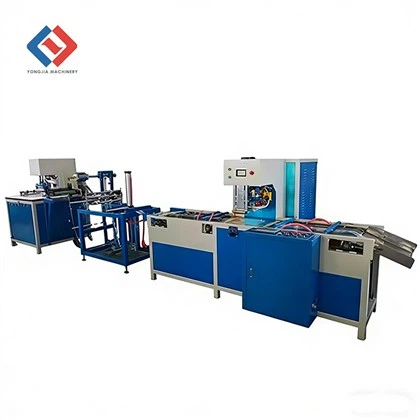
First, let’s set a baseline: automatic hot press welding machines work by clamping two materials between heated platens, applying precise pressure and heat for a set amount of time, then cooling the weld before releasing the part. The key to their reliability is that every cycle relies on three core systems: the heat generation unit, the pressure and clamping mechanism, and the control and sensor systems that time each step perfectly. Neglecting any one of these will throw off every weld, even if you have a brand-new machine straight from the crate.
Start with daily checks—these are non-negotiable, even on your busiest production days. I tell all my customers to block 5 minutes at the start of each shift and another 5 at the end to walk through these steps, because catching a small issue early prevents a full day of downtime. First, inspect the platens. These are the flat, heated surfaces that touch your materials, and even tiny debris like a shredded piece of plastic, a metal shaving, or a dust particle can leave a small blemish on the weld or even scratch the platen enough to create uneven pressure across the material. I always advise customers to use a soft, lint-free cloth slightly damp with isopropyl alcohol to wipe both platens clean at the start of every shift—avoid abrasive scouring pads, because those will damage the platen’s coating (most of our machines use a non-stick, heat-resistant coating for easy release, and scratching it will cause materials to stick and build up over time). At the end of the shift, after the machine has cooled completely, run a light cloth over the platens again to catch any debris that accumulated during production.
Next on daily checks: verify pressure and weld quality. Run a test cycle with the exact material you’ll be using that day—don’t rely on last week’s test piece, because different materials (thicker plastic, thinner fabric, coated film) have different pressure and heat requirements. Check that the platen closes evenly all the way across—stand to the side of the machine, not directly in front, and watch the gap between the top and bottom platen as it closes. If one side closes a hair faster or slower than the other, that’s a sign the clamping guides are off, which we’ll get to later, but for daily checks, a quick visual will catch uneven pressure that would leave half the weld weak. Also, pull the finished test weld apart gently—does it break cleanly along the weld line, or does it peel away cleanly from one side? Peeling is a sign either heat or pressure is off, and adjusting it early keeps you from wasting 100 good parts a day because of a mis-calibrated setting.
Then there’s the control panel checks, which take 30 seconds. Glance at the error codes (most modern automatic hot press machines have a digital panel that displays any anomalies) and check that the temperature readings match your set point. For example, if you set the platen to 180 degrees Celsius but the panel reads 172, that’s a sign the heating element is working but there’s a small calibration error—fixing that daily means you won’t end up with cold, weak welds mid-shift. Also, make sure all emergency stop buttons are unblocked and functioning—tap each one lightly (just to test, not to trigger the stop) at the start of the shift; it might seem silly, but a customer of mine once had a button get pushed by a stray box of parts, and when he needed to stop the machine for a jam, it wouldn’t work, causing a $2,000 dent in a roll of packaging film. That’s a mistake no one wants to make, so that tiny test is worth the effort.
Now move to monthly maintenance, which is the deep cleaning and calibration that keeps systems from wearing out prematurely. Monthly checks take about an hour, and I schedule them on a slow day or after a shift when the machine is already turned off and cool enough to work on. First, clean the guide rails and clamping system. The guides are the vertical rods the top platen slides up and down on, and they’re built to keep the platen aligned perfectly so pressure is even. Over time, dust, plastic debris, and even metal shavings from adjacent equipment will build up on these rails, causing friction that slows the platen or makes it close unevenly. To clean them, use a dry cloth first to wipe away built-up gunk, then apply a tiny amount of food-grade (or industrial-grade, depending on your materials) lubricant to the rails—too much lubricant will attract more debris, so a single light swipe along each rail is enough. I’ve seen customers use too much lubricant and end up with plastic parts sticking to the rails, which caused a complete shutdown that took 4 hours to fix—less is more here.
While you’re working on the clamping system, check the pneumatic or hydraulic lines (most automatic hot press machines use either pneumatic cylinders for small to medium tasks or hydraulic systems for heavy, high-pressure applications). Look for any signs of leaks: for pneumatic systems, a hissing sound near the lines or cylinders; for hydraulic, wet patches on the lines or puddles under the machine. Even a small leak can reduce pressure enough to make welds inconsistent, and fixing it early is way cheaper than replacing a damaged cylinder or line later. Also, for the cylinders, check the mounting bolts to make sure they’re tight—vibration from daily use can loosen these, leading to misalignment of the platen.
Next on monthly maintenance: calibrate the temperature sensors. Even if the digital panel reads the right temperature, the actual temperature of the platen might be off by 5 or 10 degrees, which is enough to make a weld fail. To calibrate, use a reliable digital thermocouple or infrared temperature gun (make sure it’s calibrated itself—many technicians forget to calibrate their tools, which defeats the purpose). Touch the sensor to three different spots on the platen: the center, the left edge, and the right edge. If the readings are more than 3 degrees off from the panel’s set point, adjust the calibration setting in the control panel. For example, if the panel says 180 but the center of the platen reads 175 and the edge reads 182, adjust the sensor calibration to bring those in line. This is especially important if you use materials that require exact temperatures, like medical-grade plastics that can’t be overheated or thin films that melt too easily if the platen is too hot.
Another key monthly task: check the heating elements. Most automatic hot press machines have heating elements embedded in the platens, and over time, they can develop hot spots or even burn out. To check them, turn off the machine and unplug it (safety first—never work on an electrical system without disconnecting power), then remove the access panel to the platens. Inspect the elements for any signs of damage: frayed wires, discolored spots, or breaks in the heating coils. If you see a small break in a heating element, don’t try to patch it—replace it as soon as possible, because a broken element will cause a cold spot that leaves welds weak. Even if the elements look fine, test their resistance with a multimeter to make sure they’re operating at the correct wattage; a drop in resistance can mean the element is wearing out and will need to be replaced in the next few months, so you can plan downtime ahead instead of a surprise failure.
Quarterly and annual maintenance steps are less frequent but just as important, especially for high-volume machines running 24/7. Quarterly, check the pressure relief valve (for hydraulic systems) or air filter (for pneumatic systems). A clogged air filter will reduce air flow, leading to inconsistent pressure, while a faulty pressure relief valve can cause the machine to build too much pressure, damaging the platens or the clamping system. For the air filter, replace it according to the manufacturer’s guidelines (I recommend replacing it every 3 months for machines running long hours, every 6 months for low-volume use). For the pressure relief valve, test it by running a full pressure cycle and monitoring the gauge—if the pressure spikes above your machine’s rated capacity, the valve needs to be adjusted or replaced.
Annual maintenance is the time for a full professional check, even if you’re comfortable doing most routine steps. Schedule a technician from your machine supplier (I offer these for all my customers as part of our support package) to come out and inspect all the internal components: the drive motors, the wiring harnesses, the platen coating, and the control system firmware. A technician can also do a full alignment of the platens, which is something that’s hard to do on your own without specialized tools. Annual maintenance also gives you a chance to replace any worn parts, like seals in the cylinders or worn guide bushings, before they fail and cause major downtime.
Now, let’s talk about common mistakes I see customers make that lead to machine failure, because avoiding these simple errors will save you more time and money than any maintenance checklist. First, ignoring material buildup. It’s tempting to wipe the platens down once a week, but even a tiny piece of plastic that melts and sticks to the platen will get pressed into every subsequent weld, creating a blemish that makes parts unfit for sale. Second, using the wrong lubricant. As I mentioned earlier, too much lubricant or the wrong type will attract debris and cause more friction, leading to more wear on the guides and clamping system. Third, skipping calibration. I had a customer last year who ran his machine for 6 months without calibrating the temperature sensors, and he ended up wasting 50,000 parts because the welds were too cold and weak—he lost a $12,000 order because he waited to check the calibration. Fourth, not keeping a maintenance log. It sounds boring, but writing down every check, every part replaced, and every adjustment you make helps you spot patterns: if the pressure drops every 2 months, you know to check the cylinders for leaks before it causes a shutdown, instead of being surprised.
At the end of the day, a fully automatic hot press welding machine is an investment, and like any investment, it needs care to deliver returns for years. I’ve seen machines from my customers run 15 years or more with only minor part replacements, and others need major repairs after 3 years because of neglected maintenance. The good news is that this care doesn’t require a big team or a huge budget—just consistency, a little time each day, and attention to small details.

If you’re in the market for a new fully automatic hot press welding machine, or you want to upgrade to one that’s built for easy maintenance, I’m here to help. I’ve designed my machines with accessible components, clear maintenance guides, and 24/7 support to make keeping your equipment running simple, no matter your production volume. Whether you’re a small business just starting out or a large manufacturer with 24/7 operations, the right machine paired with intentional maintenance will keep your welds consistent, your downtime low, and your business growing. Reach out to discuss your needs, and I’ll walk you through everything you need to keep your machine in peak condition for years to come.
Shuttle Table HF Welding Machine References
- Industrial Hot Press Maintenance Best Practices. Association for Manufacturing Technology, 2022.
- Guide to Automatic Hot Press Component Care. International Society of Packaging Technology, 2021.
- Preventive Maintenance for Industrial Welding Equipment. Occupational Safety and Health Administration, 2020.
- Material Science for Hot Press Platen Coatings. Journal of Industrial Materials Engineering, vol. 14, no. 2, 2023, pp. 45-62.
Dongguan Yongjia Machinery Equipment Co., Ltd.
We are one of the most reliable fully automatic hot press welding machine manufacturers and suppliers in China, specialized in providing high quality customized service. Please feel free to wholesale advanced fully automatic hot press welding machine at low price from our factory. For quotation, contact us now.
Address: No. 240, Chashan South Road, Chashan Town, Dongguan City, Guangdong Province, China
E-mail: info@yjwelding.com
WebSite: https://www.yjhighfrequencymachine.com/
