Hey folks, let’s cut to the chase—if you’ve ever dealt with HDPE buttfusion fittings, you know how much of a headache guessing types can be. When I first started in this game a decade back, I assumed all buttfusion fittings were the same. Spoiler: I was dead wrong. A newbie contractor once ordered a reducer for a gas line that ended up being the wrong pressure rating, and we had to scramble at 2 a.m. to fix it. That’s why today I’m breaking down the actual different types of PE buttfusion fittings—no boring jargon, just real stuff I see every day as a PE buttfusion fittings supplier. PE Buttfusion Fittings
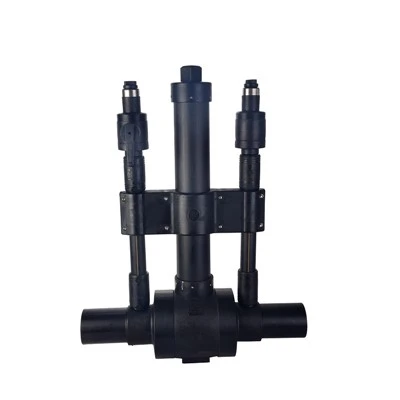
First off, let’s get the basics straight so we’re all on the same page. PE (polyethylene) buttfusion fittings are those parts you melt onto HDPE pipes to make leak-proof, permanent joints—think plumbing for water systems, gas lines, sewer mains, even industrial slurry lines. The key here is that they’re not one-size-fits-all, and misidentifying the type leads to bad joints, pressure drops, or worse, system failures. Let’s go through the main categories I stock (and see get mess-ups all the time) with real-world uses that actually matter to you.
1. Pressure-Rated Buttfusion Fittings (Oh, This Is The Big One)
This is the bread and butter for 90% of the jobs we ship out. Pressure-rated fittings are made to handle specific PSI or bar loads, and they’re split into two main sub-types based on PE resin, not shape. First, there’s PE 80 fittings—older stuff, still used for low-pressure residential water lines (like lawn irrigation or home sprinklers) where pressure doesn’t push past 100 PSI usually. Then there’s PE 100, the workhorse we sell way more of these days. PE 100 can handle up to 160 PSI for water systems, and even higher for gas lines, so it’s the go-to for municipal water mains, commercial gas lines, and industrial pipes.
Wait, people mix this up all the time: pressure rating isn’t just the fitting, it’s matched to the pipe too. If you’re running a PE 100 pipe for a 150 PSI water line, you can’t hook it to a PE 80 fitting. That’s the mistake the newbie contractor made I told you about earlier. Pro tip from my side: always double-check the marking on the fitting—most are stamped “PE 80” or “PE 100” right on the side, along with a pressure rating. I still have a stack of unopened PE 80 elbows because someone ordered them by accident for a new town water line last month. Sucks, but that’s how it goes when you don’t get the type right.
2. Shape/Design-Based Buttfusion Fittings (The Ones You Actually See On Site)
Okay, so pressure is the big functional category, but the shape of the fitting is what you grab when you need to turn a corner or join pipes. These are the types every plumber and contractor remembers because they’re named for what they do. Let’s run through the most common ones I sell:
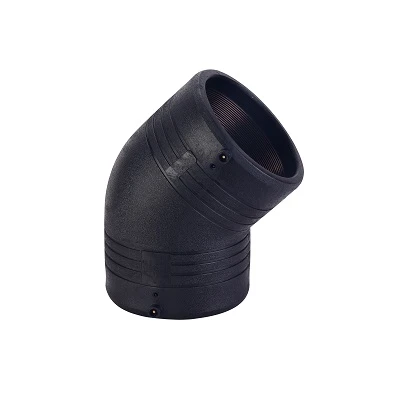
- Elbows: These are the ones that turn the pipe—90-degree elbows for sharp turns, 45-degree for gentle ones, even 22.5 for super slow bends. I can’t tell you how many times someone orders a 90 when they need a 45, or vice versa, because they misread the blueprint. Elbows come in every pressure rating too, so don’t just grab any old elbow off the shelf.
- Reducers: These connect pipes of different diameters, right? A 6-inch to 4-inch reducer for when you’re branching a main line down to a smaller service line. Important note: reducers are either concentric (same center line, used for horizontal runs so sediment doesn’t get stuck) or eccentric (offset center, used for vertical runs so air doesn’t pocket). Most people don’t even know there’s a difference until their line clogs. I make a point to mention that to every customer, because I don’t want them coming back with a mess.
- Tees: The “T” shape for branching a pipe into two directions—super common for residential services or commercial plumbing. There’s equal tees (all three ends same size), reducing tees (one end smaller, like a 6x4x4), and even lateral tees (angled branch for sewer lines). Lateral tees are a big one—if you use a regular tee for a sewer line, you’re looking at clogs left and right. We stock a ton of those for municipal sewer projects because they’re non-negotiable for that use.
- Caps: End caps that seal off a pipe run temporarily or permanently. I’ve seen people use a random chunk of PE pipe as a cap (not cool) instead of a proper buttfusion cap—those lead to leaks when pressure builds. Always use a rated cap, not a DIY fix.
- Stub ends: These are shorter fittings, basically a small piece of pipe with a buttfusion end, used when you need to connect a PE line to a metal valve or flange. Super handy, but they’re pressure-rated too, so you can’t use a light-duty stub end for a high-pressure gas line.
3. Specialized Buttfusion Fittings (For When The Job Isn’t Basic)
Now, the stuff not every stockist keeps, but I make sure I have a good supply of because these come up all the time in industrial or heavy-duty projects. These are the specialty types that can make or break a big job:
- Gas-Specific Buttfusion Fittings: Oh, this is a whole other beast. Gas fittings aren’t just pressure-rated—they’re made with black PE resin, not the blue or white for water, and they meet strict ASTM D2513 standards (super important for code compliance). People try to use water fittings for gas all the time, and that’s a huge no-no. I remember a guy tried that for a small propane line last year and got a fine from the city—turns out gas fittings have to have that black UV-stabilized resin, which water ones don’t. I always flag that with any customer mentioning gas so they don’t get in trouble.
- Sewer/Stormwater Fittings: These are built to handle higher flow, sometimes with slight bends for gravity lines (since sewers don’t have pressure). They’re usually larger diameter, and many are made to resist chemicals or sediment that regular fittings can’t. A lot of municipal projects ask for these specifically, because regular tees and elbows will get eaten away by sewage chemicals over time.
- Electrically Conductive Buttfusion Fittings: Wait, you’ve seen those fittings with a wire sticking out, right? Those are electrofusion-adjacent? No, wait, no—wait, buttfusion fittings that are electrically conductive are used for cathodic protection, mostly for gas lines. Basically, they prevent corrosion by letting electrical current flow through the joint. Most general contractors don’t use these, but oil and gas pipeline companies buy them by the truckload. I keep a dedicated bin for these because they don’t sell as much, but when a pipeline job hits, they need them yesterday.
- Custom Buttfusion Fittings: Sometimes a job needs something that’s not standard—like a weird angle, or a non-standard diameter, or a combination of shapes. I work with a local engineering firm that needed a custom reducer-tee for a industrial slurry line last year, and we milled it to their specs in 3 days. That’s the advantage of being a smaller supplier, not a big box store that only carries pre-made stuff. Custom fittings cost a little more, but they save you from having to piece together multiple standard fittings that might not work right.
Common Mistakes People Make When Ordering (I See These Every Week)
Let’s wrap this up with the stuff that trips people up, because knowing the types is half the battle. First: never mix up resin type. PE 80 vs PE 100 isn’t just a number—it’s how much pressure the fitting can take. Second: don’t skip the shape specifics. A 45-degree elbow vs a 90 might seem minor, but get it wrong and you’ll be cutting pipes on site at 5 p.m. when the crew’s already packed up. Third: always check the application. Water fittings can’t be used for gas, sewer fittings don’t work for high-pressure industrial lines, and conductive fittings are only for corrosion-prone systems.
Ready To Find The Right Fitting For Your Job?
If you’re a contractor, plumber, municipal worker, or industrial project manager—don’t waste time guessing. I’ve got all the types I mentioned, and I can help you pick the exact one you need, no jargon, no hidden fees. Shoot me a message whenever, no matter how big or small your project is—even if you just need one little elbow for a repair, I’ve got your back.
PE Steel Transition Fittings References:
ASTM International. (2020). Standard Specification for Polyethylene (PE) Gas Distribution Piping Systems and Fittings. ASTM D2513.
American Water Works Association. (2019). PE Pipe Manual: Design and Installation. AWWA M55.
Plumbing-Heating-Cooling Contractors Association. (2021). HDPE Butt-Fusion Fitting Selection Guide. PHCC Technical Bulletin.
Zhejiang Shengbo Pipe Fittings & Valves Industry Co., Ltd.
With abundant experience, we are one of the most professional pe buttfusion fittings manufacturers and suppliers in China. Please feel free to buy discount pe buttfusion fittings from our factory. Welcome to contact us for quotation and free sample.
Address: No. 79 Hemudu North Road, Hemudu Town, Yuyao City, Ningbo City, Zhejiang Province, China
E-mail: shengbo@zj-shengbo.com
WebSite: https://www.shengbofitting.com/
