If you’re someone who’s been deep in the Wi-Fi space—whether you’re a small business owner scrambling to upgrade your office network, a home lab tinkerer chasing the fastest possible speeds, or a network engineer tired of troubleshooting lag during peak hours—you’ve probably caught wind of Wi-Fi 7 by now. This next-generation wireless standard has been billed as a game-changer, with promises of faster speeds, lower latency, and better performance in crowded spaces. But here’s the question that’s been popping up in my DMs, our support inbox, and at every industry meetup I’ve attended in the last six months: Are there actually any wireless APs that support Wi-Fi 7? As the head of product for a wireless AP supplier, I’ve been fielding this one nonstop, and I want to cut through the hype and the half-truths to give you the straight story. Wireless APs
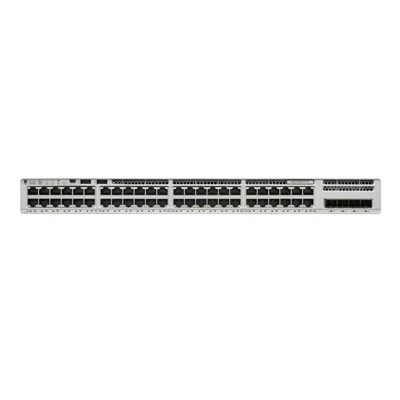
First, let’s get one thing out of the way early: Wi-Fi 7 is real, it’s ratified, and it’s not a distant pipe dream. The Wi-Fi Alliance officially completed the certification process for IEEE 802.11be in March 2024, which means products that carry the Wi-Fi 7 logo have passed rigorous testing to meet the standard’s specifications. For context, the Wi-Fi Alliance doesn’t just let any product call itself a new Wi-Fi generation—they test everything from speed to signal stability to ensure it works seamlessly with other certified gear. Before 2024, Wi-Fi 7 products were mostly pre-release, in early access, or limited to niche use cases like enterprise beta deployments. That’s a big shift, and it’s why now is the time businesses and home users alike are finally starting to see reliable, certified Wi-Fi 7 access points hit the market.
I know what a lot of you are thinking: “Wait, I thought Wi-Fi 7 was just a marketing buzzword for 2025?” I get it. The rollout timeline for new Wi-Fi standards has felt slow the last decade. Wi-Fi 6 launched in 2019, Wi-Fi 6E in 2020, and Wi-Fi 7 was pushed back a few times because of delays in finalizing the 802.11be specifications. But this time around, the hardware manufacturers didn’t wait for the final ratification to build and test products. They spent years refining silicon chipsets that could handle Wi-Fi 7’s key features—like 320 MHz channel bandwidth, 4096-QAM modulation, and multi-link operation (MLO)—and once the Wi-Fi Alliance signed off, they were ready to ship products within months. That’s why you can walk into a tech conference, or reach out to a reputable AP supplier like us, and find certified Wi-Fi 7 access points right now.
But before you go and swap out every AP in your office, let’s talk about what makes a true Wi-Fi 7 AP, and what to watch out for. A lot of vendors are slapping “Wi-Fi 7” on products that only support a subset of the standard, or use marketing language that misrepresents capabilities. For example, some dual-band APs that work on 5 GHz and 6 GHz might advertise “Wi-Fi 7” but only support 160 MHz channels, not the full 320 MHz that’s part of the standard. Others might support MLO, but only on a single band, which negates most of its benefit. At our company, we test every Wi-Fi 7 AP we offer to make sure it meets three key criteria: it’s Wi-Fi Alliance certified, it supports all core Wi-Fi 7 features, and it’s compatible with older Wi-Fi standards (like Wi-Fi 5 and Wi-Fi 6) so you don’t have to replace all your devices at once to get the benefits.
Now, for the most important part: what do these Wi-Fi 7 APs actually do, and who should care? Let’s break down the key features and why they matter. First, 320 MHz channel bandwidth. Older Wi-Fi standards max out at 160 MHz channels (with Wi-Fi 6E), but Wi-Fi 7’s 320 MHz channels let you send and receive way more data at once. On paper, that translates to theoretical speeds of up to 46 Gbps for a single AP—way faster than Wi-Fi 6’s 9.6 Gbps maximum. But real-world performance is even better when you’re dealing with multiple devices. Second, 4096-QAM modulation, which is like fitting more data into each wireless signal. Wi-Fi 6 used 1024-QAM, so Wi-Fi 7’s 4096-QAM gives a 25% speed boost for signals that can handle it. Third, multi-link operation (MLO), the feature that makes Wi-Fi 7 stand out the most for crowded spaces. MLO lets a device connect to multiple bands or channels at the same time, instead of switching between them. So if your office is full of 50+ people streaming, video calling, and using IoT devices, MLO ensures you’re not dropping connections or slowing down when someone else on the same channel is using bandwidth.
For our customers, that means a lot. We’ve been testing our first line of Wi-Fi 7 APs with a handful of beta clients over the last year—things like a retail chain that had laggy self-checkout systems, a university with over 10,000 students streaming lectures during exam season, and a marketing agency that does a lot of large file transfers for client projects. The results have been clear: in a crowded office space, a single Wi-Fi 7 AP can handle twice as many devices as a Wi-Fi 6 AP without slowing down, and file transfers that used to take 10 minutes now take less than a minute. We had one beta customer, a healthcare clinic with 200+ devices running EHR systems and telehealth tools, tell us that they haven’t had a single dropped connection during peak hours since installing our Wi-Fi 7 APs, which was a huge pain point for them before.
But I also want to be honest about the limits right now. Wi-Fi 7 APs are still more expensive than high-end Wi-Fi 6 APs, which means they’re not the right choice for every use case. If you have a small home office with only a few devices, or a small retail space that only needs to support a handful of POS systems and customer Wi-Fi, Wi-Fi 6 is still a great, more affordable option. Wi-Fi 7 is best for spaces with high device density, high bandwidth requirements, or where low latency is non-negotiable. That’s why we position our Wi-Fi 7 APs as a targeted solution, not a one-size-fits-all upgrade, and we work with every customer to assess their needs before recommending a product.
Another common question I get: Will my old devices work with Wi-Fi 7 APs? The short answer is yes. Wi-Fi standards are backward compatible, so any device that works with Wi-Fi 5, Wi-Fi 6, or Wi-Fi 6E will connect to a Wi-Fi 7 AP just fine. That means you don’t have to replace every laptop, phone, or IoT device in your business to take advantage of the new standard’s benefits. The only caveat is that older devices will only connect at their maximum supported speed, not the Wi-Fi 7 speed. So if you have a mix of old and new devices, a Wi-Fi 7 AP will still give your older gear a reliable connection, while the new devices on Wi-Fi 7 get the faster speeds and lower latency.
Now, if you’re reading this and thinking, “Okay, I’m ready to look into Wi-Fi 7 APs for my business, how do I get started?” Let me walk you through what our process looks like at our company. First, we don’t just push our Wi-Fi 7 APs on every customer. We start with a free, no-obligation network assessment. We’ll ask you about your space, the number of devices you have, the types of applications you use, and any pain points you’re currently having with your network. Then, we’ll recommend the right product: maybe that’s our high-density Wi-Fi 7 AP for your office, or maybe that’s a more cost-effective Wi-Fi 6 solution if Wi-Fi 7 isn’t necessary for your needs. We also offer flexible deployment options, including managed support, so you don’t have to have a full IT team to install and maintain your new APs.
I’ve been in the wireless AP space for over 15 years, and I’ve seen a lot of new standards come and go. Wi-Fi 7 is different, though, because the hype is finally matching the real-world capabilities. Too many times in the past, vendors would release a “new” Wi-Fi standard with a few minor tweaks and call it a revolution. But Wi-Fi 7’s core features—320 MHz channels, MLO, 4096-QAM—solve actual problems that businesses have been dealing with for years: crowded spaces, too many devices, too much bandwidth demand. At our company, we’ve spent years testing and refining our Wi-Fi 7 APs to make sure they’re reliable, scalable, and easy to use, and we’re proud to be one of the suppliers that’s bringing certified Wi-Fi 7 to businesses right now, not just promising it for next year.

If you’re curious to learn more about whether Wi-Fi 7 is the right fit for your network, or if you want to see a demo of our Wi-Fi 7 APs in action, I encourage you to reach out to our team for a consultation. We work with businesses of all sizes, from small startups to enterprise clients, and we’ll take the time to answer all your questions, no sales pressure attached. The Wi-Fi landscape is changing fast, and having a reliable network that can keep up with your business’s growth isn’t just a nice-to-have—it’s essential. Whether you’re upgrading for the first time or looking to replace outdated gear, we’re here to help you make the right choice for your needs.
Wireless APs for Aruba References:
Wi-Fi Alliance. (2024). Wi-Fi 7 (IEEE 802.11be) Certification Complete. Wi-Fi Alliance Official Press Release.
IEEE Standards Association. (2023). IEEE 802.11be-2023: Standard for Information technology – Telecommunications and information exchange between systems – Local and metropolitan area networks – Specific requirements – Part 11: Wireless LAN Medium Access Control (MAC) and Physical Layer (PHY) Specifications Amendment 1: Enhancements for extremely high throughput.
Network World. (2024). Wi-Fi 7 is here: What enterprise buyers need to know about the latest wireless standard. Network World Technical Report.
AITI Tech Limited
AITI Tech Limited is one of the most professional wireless aps manufacturers and suppliers in China for over 20 years, featured by quality products and low price. Welcome to buy bulk discount wireless aps in stock here from our factory. If you have any enquiry about pricelist, please feel free to email us.
Address: 6F, Haogong Building, Yannan Road, Futian District, Shenzhen, China
E-mail: kelly@hkaiti.com
WebSite: https://www.hkaiti.com/
