Hey there, welcome to the blog – I’m part of the team that supplies flange bolting belleville washers, and I get hit with this question all the time: what’s the actual standard thickness range for these little disc springs when they’re paired with flanges? Let’s cut through the confusion, because there’s a lot of misinformation floating around out there when it comes to picking the right belleville washer thickness for flange applications. Flange Bolting Belleville Washer
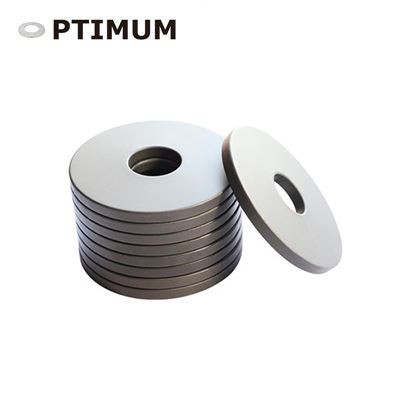
First off, let’s ground this in what we do every day for clients: belleville washers (also called disc springs, for those who might not know the jargon) used for flanges aren’t just random thin metal discs. They’re critical for sealing – think pipe flanges, pressure vessels, pump connections, stuff where a leak can lead to downtime, safety issues, or even costly repairs. The thickness isn’t pulled out of thin air; it ties directly to industry standards, flange size, pressure rating, and how much load you need to take up to keep the bolts tensioned long-term. No two flange setups are identical, but there are standard ranges that cover 90% of common industrial uses.
Let’s start with the main standards that govern this – because when we spec washers for a client’s flange, we’re referencing these guys. The two big ones in North America are ASME B16.5 (that’s for pipe flanges and flanged fittings) and ASME B16.47 (for larger, heavy-duty flanges, like those on big process pipes). Over in Europe, it’s EN 13092, but a lot of global projects align with the ASME specs too, so I’ll focus on those since they’re the most widely requested by clients we work with.
Now, the thickness range itself – I hear you asking: “Is it just 1mm to 5mm?” No, wait, it’s way more nuanced, split between standard series belleville washers, which are the go-to for most flanges, and heavy series, for higher loads. Let’s break it down by washer outer diameter (OD), because that’s the first thing you match to your flange bolt size.
For small to medium flanges – think 1-inch to 12-inch pipe flanges (so bolt sizes from 1/2-inch up to 1-1/4-inch) – the standard belleville washer thickness range is 1.52mm to 3.0mm (that’s 0.060 inches to 0.118 inches, for imperial folks). Wait, let’s give real examples to make this concrete. A common 150 ASME B16.5 flange with a 3/4-inch bolt uses a standard series belleville washer with a thickness of around 1.52mm (0.060”). That’s thin enough to stack if needed, but thick enough to hold consistent bolt tension. For a 300 ASME flange with a 1-inch bolt, you’ll usually step up to a 2.0mm (0.079”) thickness. Why? Because higher pressure flanges need more load absorption – the gasket under the flange compresses when you heat up the pipe, and the washer takes up that relaxation so your bolt doesn’t go loose.
Now move to larger flanges – 14-inch up to even 60-inch, which uses bolts from 1-1/2-inch to 3-inch. This is where the range gets a little wider, running from 2.5mm to 5.0mm (0.098 inches to 0.197 inches). Wait, let’s test that with a real job we did last quarter: a sugar processing plant needing washers for 20-inch Class 600 flanges. We spec’d heavy series belleville washers at 3.8mm thickness, because that flange sees frequent temperature swings (from 80°F ambient to 350°F processing), so we needed a thicker washer to handle the thermal expansion and keep the flange sealed for months without retorquing. If we’d used a 2.5mm washer there, it would’ve flattened out after a few thermal cycles and lost tension – total headache for their maintenance team.
But hold on, there’s a catch here: that’s the standard nominal thickness range, but it’s not one-size-fits-all because of the “height-to-thickness ratio” – another term we throw around that matters a lot. Belleville washers are rated by h/t, where h is the free height of the disc and t is the thickness. For flange applications, the sweet spot for h/t is between 1.0 and 1.5. If you go below 1.0, the washer is too stiff, won’t deflect enough to handle load relaxation; above 1.5, it’s too springy, might overload the bolt or bottom out too fast. So even if you see a washer in the 1.5-5mm range, if its h/t is off, it’s not right for flanges.
Wait, let’s address a common mistake we see clients make when sourcing: they try to use standard (non-flange specific) belleville washers from a random supplier that only stocks 1mm and 6mm thicknesses. Those 1mm washers are way too thin for most flange bolting – they’ll deflect too much, and their load capacity is way lower than what a pipe flange needs. The 6mm ones? They’re for super heavy duty, like bridge bearings, not for 150-class process flanges. That’s why our team trains buyers to check the washer spec against their flange’s class first, not just grab whatever’s cheapest.
Another point: material affects thickness too, right? We mostly supply 17-4 PH stainless steel and Alloy X750 belleville washers for flanges, because those hold up to corrosion and high temperatures. A 1.5mm 17-4 PH washer has way more load capacity than a 1.5mm carbon steel washer, so you might use a slightly thinner stainless washer for a Class 150 flange than you would carbon steel, since stainless is stronger. That’s a tip we always pass along to new clients – don’t ignore material when picking thickness, it’s not just about the number on the caliper.
Let’s also talk about stacking, because that’s a common trick for flanges with really high relaxation. Sometimes if a single washer at 3mm isn’t enough, you stack two 1.5mm washers together. The total thickness there is 3mm, same as a single, but the total deflection is higher, which means it takes up more relaxation over time. But when you stack, you have to make sure the individual thicknesses are within that 1.52-3mm range for small flanges, or 2.5-5mm for large ones. You can’t stack a 1mm and a 2mm to make a custom 3mm, because that will cause uneven load distribution and could break the bolt.
Now, let’s get into the standards sources to back this up, because I don’t want to sound like I’m just pulling numbers out of my back pocket. ASME B16.5’s appendix has a section on bolt tensioning for flanges, and it references belleville washer thickness ranges matched to bolt size and flange class. ASME B16.47 (the large flange spec) has similar guidelines, adjusted for bigger, higher-pressure flanges. We also follow DIN 2092 for metric belleville washers, which aligns almost exactly with the ASME ranges we use – so if you’re working with metric flanges, the thickness range is the same, just measured in millimeters (no imperial conversion needed there).
Wait, let’s clear up another common question: do different gasket types change the required washer thickness? Yes, actually. If you’re using a soft gasket, like rubber or PTFE, it compresses more than a metal spiral-wound gasket, so you might need a slightly thinner washer (say 1.5mm vs 2mm for a Class 150 flange) because the gasket is doing some of the load taking. If you’re using a metal gasket, which compresses less, you need a slightly thicker washer to handle the relaxation from temperature cycles. That’s a small detail, but it’s why our sales team always asks for the flange class, bolt size, gasket type, and operating temperature before we recommend a washer – we don’t just sell thicknesses, we sell solutions that work.
Now, let’s talk about why this matters so much. We had a client last year in the oil and gas industry who cut corners on washer thickness for a 10-inch Class 300 flange. They used 1.2mm washers instead of the standard 2.0mm, because they found a “cheaper” batch. Two months later, the flange leaked during a pressure test – cost them $80,000 in downtime, plus the cost of rebolting and replacing the gasket. That’s the kind of call we get to fix all the time, and it boils down to picking the wrong thickness. The standard range isn’t arbitrary – it’s tested over decades to prevent that exact issue.
Let’s recap to make sure we’re on the same page, in case you skipped to the end: for flange bolting belleville washers, the standard thickness range breaks down like this:
- Small to medium flanges (1” – 12” diameter, Class 150 – Class 300): 1.52mm to 3.0mm (0.060” – 0.118”)
- Large flanges (14” – 60” diameter, Class 600 and above): 2.5mm to 5.0mm (0.098” – 0.197”)
But always adjust for material, gasket type, operating temperature, and that h/t ratio we talked about earlier – don’t just grab a number off a spec sheet.
I know, I know – this sounds like a lot of info, but when you’re buying belleville washers for flanges, the last thing you want is a flange leak or loose bolts. We’ve been in this game long enough to know that picking the right thickness isn’t just a technical detail, it’s a way to keep your operations running smoothly, avoid costly repairs, and keep your team safe.
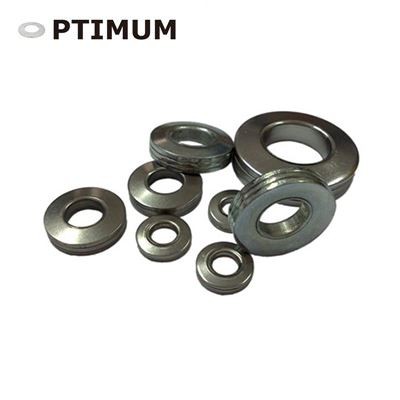
If you’re not sure what thickness you need, hit us up. We don’t just push the standard sizes – we work with you to get the exact washer that fits your flange setup, no upcharges for custom specs when they’re needed. We’ll ask a few quick questions about your flange class, bolt size, operating conditions, and get you a recommendation that works. No sales pitch, just honest advice from a team that’s been solving flange bolting problems for years.
Disc Spring DIN2093/EN16983 References:
ASME B16.5-2020, Pipe Flanges and Flanged Fittings: NPS 1/2 Through NPS 24 Metric/Inch Standard.
ASME B16.47-2019, Large Diameter Steel Flanges: NPS 26 Through NPS 60 Metric/Inch Standard.
DIN 2092:2010, Disc Springs – Dimensions, Loads.
Yangzhou Optimum Spring Manufacturing Co., Ltd.
As one of the most professional flange bolting belleville washer manufacturers and suppliers in China, we’re featured by quality products and good service. Please rest assured to buy customized flange bolting belleville washer made in China here from our factory. For more information, contact us now.
Address: No.9 West of Shuangtang Rd, Yangzhou, P.R. China 225000
E-mail: susie@optimum-spring.com
WebSite: https://www.optimum-spring.com/
