If you’ve ever priced quartz wall cladding before, you know the cost swings wildly—from a budget-friendly per-square-foot rate for basic slabs to a premium figure for custom, natural-stone-inspired designs. As a quartz wall cladding supplier who’s worked with residential renovators, commercial architects, and small-business owners for over 12 years, I’ve heard every frustration: “Why is that 20% more than the last quote?” or “Is this really worth the extra cost for a commercial project?” The truth is, quartz wall cladding isn’t a one-size-fits-all product. Every step from raw material extraction to on-site installation adds layers of cost that don’t always appear in the initial sales pitch. Let me break down the key factors that impact pricing, based on what I’ve learned lugging slabs to job sites, troubleshooting design tweaks, and negotiating with quarries and fabricators. Quartz Wall Cladding

First, and most obvious, is the quality of the quartz itself. Not all quartz is equal—this isn’t the same as the sand you use in a backyard sandbox. High-quality quartz is made of 93% natural quartz crystal and just 7% resin, pigments, and binding agents, while lower-grade options can have as little as 70% natural quartz mixed with cheaper filler materials to cut costs. For example, our flagship premium line uses quarried quartz from mines in Brazil and Norway, where the stone is denser, more scratch-resistant, and less prone to fading over time. A customer in downtown Chicago once installed our budget line in a high-traffic hallway; within three years, the cladding had developed faint, permanent scratches from rolling office chairs, while a nearby project using our premium line still looked as good as the day it was installed. The resin mix also matters: low-quality resins turn yellow in direct sunlight, so a home in Arizona might need UV-resistant resin that adds 10-15% to the material cost. I’ve seen this play out firsthand—we recently replaced a batch of yellowed cladding for a café in Phoenix, all because the owner went for the cheapest option to save a few dollars upfront. That mistake ended up costing them more in repairs than if they’d bought a higher-quality product from the start.
Next, the size and thickness of the cladding slabs or tiles are huge. Quartz wall cladding comes in two main formats: large-format slabs (often 120×240 cm or bigger, used for modern, seamless walls) and smaller tiles (30×30 cm, 60×60 cm, etc., for more traditional or intricate layouts). Larger slabs require specialized manufacturing equipment to cut without cracking, and shipping them is more complicated too—you can’t stack them like small tiles; they need custom crating to avoid damage. Our large-format premium slabs, for example, cost about 25% more per square foot than standard 60×60 cm tiles, just because of the extra handling. Thickness is another layer: basic cladding is 10 mm thick, but for commercial projects like lobbies or outdoor walls, you’ll often need 20 mm or even 30 mm thick slabs to stand up to heavy foot traffic, weather, or impact. A school district in Texas recently ordered 30 mm thick cladding for a new gym because they knew students would lean against the walls and sports gear might bump into them. The extra thickness added 30% to their material cost, but they avoided the hassle and expense of replacing damaged walls a few years down the line.
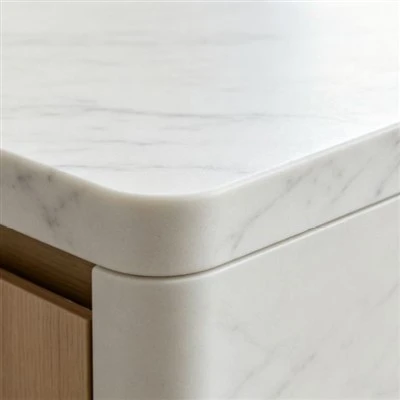
Design complexity is often the biggest surprise for customers. Plain, solid-color quartz is the cheapest option, but once you add patterns, veining, or custom edges, the price goes up fast. Let’s say you want a quartz wall with marble-like veining—fabricators have to use more pigment and carefully control how the resin is mixed to create that natural, flowing pattern, which is more labor-intensive than just pouring a solid color. For custom shapes, like curved walls or cladding with cutouts for electrical outlets or light switches, the cost jumps even higher. We recently worked on a boutique hotel in New York City with a lobby that had a curved quartz feature wall; the fabricator had to create custom templates, adjust the cutting machine in real time to follow the curve, and do extra quality checks to ensure the pieces fit together seamlessly. That project’s cladding cost was 40% higher than a straight, solid-color wall of the same size, but the final result was a showstopper that the hotel uses as its main selling point. Even simple details like the edge finish matter: a straight, square edge is standard and cheap, while a beveled or mitered edge adds time to the fabrication process, so it costs more.
Then there’s the finish type, which affects both aesthetics and durability. The most common finishes are polished, matte, honed, and textured, and each has a different production cost. Polished quartz is the most popular for high-end projects because of its sleek, reflective surface, but the polishing process uses specialized machinery to grind and buff the slab to a smooth, shiny finish. That extra step adds about 10% to the cost compared to a matte finish. Honed finishes, which are less reflective and look more like natural stone, require less polishing but more precise grinding to get a uniform, non-slip surface—good for bathrooms or outdoor areas where wet feet are common. Textured finishes, like a tumbled or hand-finished look, are the most labor-intensive because they involve manually sanding or etching the surface to create a rough, aged effect. We did a residential project in California a few years ago where the homeowner wanted a rustic, reclaimed stone look for their living room wall; the textured finish added 20% to the cladding cost, but it matched their farmhouse-style decor perfectly and held up to daily use without showing scuffs like polished surfaces would.
Shipping and logistics can also add unexpected costs, especially for remote or international projects. Quartz is heavy—a square foot of 10 mm thick quartz weighs about 15 pounds, so a 100 square foot wall is 1,500 pounds of material. Transporting that from our warehouse to a job site adds fuel costs, labor for loading and unloading, and insurance to cover damage during transit. For a project within 100 miles of our warehouse, shipping is usually 5-10% of the material cost, but for a project 500 miles away, that can jump to 15-20%. We recently delivered a batch of cladding to a small town in Montana, and because the roads were icy in the winter, we had to hire a specialized truck with snow chains and delay the shipment for two days. The extra shipping cost for that project was 25% higher than we quoted initially, but we made sure to communicate that upfront so the customer wasn’t caught off guard. International shipping is even pricier—importing quartz from Europe or Asia can add 30-40% to the cost due to customs fees, import taxes, and long transport times. That’s why most customers choose domestically quarried quartz for large projects to keep logistics costs down.
Installation is another major factor that’s often separated from the material cost. Many suppliers quote material only, but installation depends on so many site-specific details that it’s hard to give a one-size-fits-all number. First, the condition of the wall: if the existing wall is uneven, has damage, or is made of a material that’s not compatible with quartz, you’ll need to prep it first—like adding a substrate of cement board or plywood, or patching holes. That prep work can add 15-20% to the total installation cost. Then, the skill level required: installing large-format slabs is much harder than small tiles because you need to lift heavy pieces and ensure they’re level. For a commercial project with a 20-foot tall wall, installers will need scaffolding, which adds time and cost. We’ve also seen projects where the electrical or plumbing was routed wrong, so installers had to cut custom holes in the quartz cladding, which adds labor time and sometimes material waste. A customer in Boston once tried to install quartz cladding themselves to save money, and when they messed up the alignment of the slabs, they had to replace three full pieces—costing them more than hiring a professional would have in the first place.
Finally, add-on services and warranties play a role in the final cost. Some suppliers offer free design consultations, 3D renderings of the wall, or cutting services to fit your exact layout, while others charge extra for these. Warranties are also a big one: a basic 1-year warranty that covers manufacturing defects is standard, but premium warranties that cover scratches, fading, or damage from heavy use can add to the cost. Our top-tier warranty, for example, covers our premium quartz cladding for 15 years, which gives customers peace of mind, especially for commercial properties that expect high use. We once had a restaurant in Florida where a food truck backed into a wall, chipping a slab; under our warranty, we replaced the slab at no cost to the owner, which saved them thousands of dollars in repairs. That’s the kind of value that isn’t always obvious when you compare base prices from different suppliers.
Over the years, I’ve learned that the cheapest quartz wall cladding isn’t always the best long-term investment. I’ve had customers come to me after paying a low price for cladding that faded, scratched, or fell off the wall within a year, and they’ve had to spend more to replace it with quality products from our line. The key is to look at the total cost of ownership, not just the upfront price. If you’re planning a project, think about how the wall will be used—high-traffic areas need thicker, higher-quality quartz, while decorative walls can use more affordable options. Working with a reliable supplier who can walk you through all these factors will help you make a decision that fits your budget and lasts for years.
If you’re ready to start planning your quartz wall cladding project and want a personalized quote, we’re here to help. Our team can walk you through material options, design choices, and installation timelines to find the best solution for your home or business. Contact us to discuss your project needs today.
Quartz Surface References
- Quartz Council. (2022). “The Science of Engineered Quartz: Composition, Durability, and Performance.”
- National Association of Home Builders. (2021). “Cost Factors for Interior Cladding and Wall Finishes.”
- International Building Code. (2020). “Requirements for Wall Cladding in Commercial and Residential Applications.”
- Stone World Magazine. (2023). “Large-Format Quartz: Manufacturing, Installation, and Cost Considerations.”
Wuhu Junde New Material Technology Co., Ltd.
As one of the most experienced quartz wall cladding manufacturers and suppliers in China since 1998, we warmly welcome you to wholesale top-quality quartz wall cladding made in China here from our factory. If you have any enquiry about cooperation, please feel free to email us.
Address: No.8 Yulin Road, Xinwu Economic Development Zone, Anhui Province, China
E-mail: 1127319898@qq.com
WebSite: https://www.jundequartz.com/
