Hey there, if you’re reading this, chances are you’re deep in the weeds of building a fire protection system and wondering, “Can a vertical multistage pump (VMP) actually pull this off?” Or maybe you’re a facilities manager, fire code nerd, or even someone who just got stuck researching pumps for a new commercial build—no judgment, we’ve all been there. As a VMP supplier, I’ve fielded this question a hundred times, and let’s be real: not every pump works for fire suppression. Throw in the fact that fire codes are no joke (think NFPA, local OSHA rules, all that stuff), and you can’t just grab any old multistage pump and call it a day. Let’s break down exactly what you need to know before hitting “buy”—no boring jargon, just real talk from someone who’s actually in the pump game. Vertical Multistage Pump

First off, let’s get one thing straight: fire protection pumps aren’t your average water circulators for a HVAC system or a basement sump. These things are the backbone of keeping sprinklers flowing, standpipes pressurized, and fire hoses working when every second counts. So when it comes to vertical multistage pumps specifically, their whole “vertical” and “multistage” design gives them a big edge—they take up way less floor space than horizontal pumps (huge win for tight mechanical rooms) and can crank up the pressure without being massive. But that advantage only works if they check every single box the fire gods (read: codes) demand.
Let’s start with the big one: code compliance. I can’t stress this enough. If your pump doesn’t meet NFPA 20, you’re wasting your time. NFPA 20 is the National Fire Protection Association’s standard for the installation of stationary fire pumps, and it’s non-negotiable in almost every state and country. What does that mean for VMPs specifically? They have to be listed and labeled for fire service by a recognized testing lab—like UL or FM Global. No exceptions. I’ve seen guys skip this, grab a VMP from a general industrial supply house, and get hit with a stop-work order before the concrete even cures. The label isn’t just a sticker; it’s proof the pump has been tested to handle the extreme demands of fire flow—like running nonstop for hours, handling cold or slightly temp water, and not crapping out mid-call. Also, depending on your location, local building codes might add extra rules, but NFPA 20 is the baseline.
Next up, hydraulic performance—this is where a lot of people get tripped up. Fire pumps have two key specs: flow rate and pressure, often called the “curve.” Your VMP isn’t just a one-size-fits-all; it has to match the exact flow and pressure your system needs. Let’s simplify: flow rate is how much water the pump has to push (like, how many sprinklers are on a floor, or the size of standpipes). Pressure is that push—how high it can get water, or how much force it needs to make sure sprinklers activate properly. For vertical multistage pumps, their multistage design means they can adjust pressure by adding or removing stages, so you don’t have to oversize the pump just to hit pressure. But here’s the catch: NFPA 20 requires the pump to perform at 150% of rated flow and 100% of rated pressure, and also at 100% flow with 0 pressure drop. Wait, let’s make that real: if your pump is rated for 500 gpm at 150 psi, it has to still push 750 gpm when pressure dips to 100 psi, and push 500 gpm at 150 psi without stalling. A lot of off-brand VMPs will fail this test because their hydraulic curves are wobbly. As a supplier, we do a full hydraulic analysis for every project to make sure the pump matches exactly—no guesswork.
Then there’s the power source and driver compatibility. Fire pumps need to run reliably, so their driver (the thing that spins the pump—usually an electric motor or diesel engine) has to be rated for continuous fire service. For VMPs, electric drivers are super common, especially for indoor applications, because they’re quieter and more efficient. But the motor has to be a NEMA Premium Efficiency motor, right? And it has to handle the locked-rotor current that happens when the pump kicks on—no tripping the main circuit breaker when the fire alarm goes off. If you’re in an area with frequent power outages, you might need a diesel-driven VMP, but make sure the engine’s rated for fire service too. Also, vertical pumps have a different shaft alignment thing compared to horizontal ones—since they’re upright, shaft alignment has to be precise, especially for the motor and pump connection. Bad alignment leads to vibration, which wears out seals super fast—something you don’t want when you need the pump to work.
Seal and material specs are another big one, and this is where VMPs shine if you pick the right model, but can fail hard if you cut corners. Fire protection systems use water—usually potable water, but sometimes it’s water with a bit of sediment or corrosion, especially in older buildings. The pump’s wetted parts (the parts that touch water) have to be corrosion-resistant. For VMPs, that means things like the impeller, casing, and shaft should be stainless steel—304 or 316 grade, depending on your water quality. 304 works for most potable water, but if you’re in a hard water area with lots of minerals, 316 is better because it’s more resistant to pitting. Now, seals: mechanical seals, not packing seals. Packing seals leak, plain and simple. NFPA 20 requires mechanical seals for fire pumps, and they have to be rated for the pressure and temperature of the water you’re using. Also, some VMPs have a seal leak detection port—super handy because if the seal starts failing, you get an alert before it leaks all over the mechanical room, which can cause water damage and mean the pump isn’t working when you need it. I’ve had a customer who skipped that, and their seal failed 6 months after installation, causing $10k in water damage—don’t be that guy.
Installation and space considerations—this is the whole reason people pick vertical multistage pumps in the first place, so don’t sleep on it. Vertical pumps take up way less footprint than horizontal pumps, which is a huge win if your mechanical room is tiny (like, in a high-rise where every square foot costs money, or a retrofitted building where you can’t tear out walls for a bigger pump room). But you still need clearance around the pump for maintenance. NFPA requires at least 30 inches of space in front of the pump for accessing couplings, seals, and motors, and enough space at the top for lifting the motor if you need to work on the impeller. Also, since they’re vertical, you have to make sure the pump is mounted on a level foundation—even a tiny tilt can throw off shaft alignment and cause vibration. And don’t forget about piping: vertical pumps have suction and discharge points that are usually on the bottom and top, so you have to size your suction and discharge pipes correctly to avoid cavitation. Cavitation is when the pump sucks in air because the pipe is too small, leading to loud noise and pump damage. I’ve seen that happen when someone tried to use a 2-inch suction pipe for a pump that needed a 3-inch—total disaster.
Testing and maintenance requirements. Fire pumps don’t just get installed and forgotten—they need to pass annual testing, and the pump has to be able to handle those tests. For VMPs, that means they should be easy to access for flow testing. A lot of vertical models come with built-in test ports, which makes it way easier to run the required 150% flow test without having to rig up extra piping. Also, maintenance: VMPs have fewer moving parts than horizontal pumps (since the motor is on top and the stages are stacked vertically), so they’re easier to service. But you need to have the right parts on hand—like spare mechanical seals, impellers, and couplings. As a supplier, we keep a full stock of these parts so our customers don’t get stuck waiting for a replacement when a test is due. Also, NFPA requires a full pump performance test every 3 years, so your VMP has to be able to connect to a flow meter without too much hassle.
Wait, let’s not forget about suction pressure. Net Positive Suction Head Required (NPSHr) is a term that gives a lot of people headaches, but it’s critical for VMPs. NPSHr is how much pressure the pump needs on the suction side to avoid cavitation. Your system’s Net Positive Suction Head Available (NPSHa) has to be higher than the pump’s NPSHr. If NPSHa is too low, you get cavitation, eroded impellers, and no pressure at the discharge. For vertical multistage pumps, since their suction is usually at the bottom, NPSHr is lower than some horizontal pumps, which is another plus. But you still have to calculate it correctly—take into account the height of the water source (like a fire tank or reservoir), the pipe friction loss, and any fittings. If you’re pulling water from a underground tank, for example, the suction pipe has to be sized right so you don’t drop the pressure too much before it gets to the pump.
Now, let’s talk about common mistakes I see all the time. First, buying a VMP that’s rated for industrial use, not fire service. I’ve had customers come to me with a pump they bought online for a pressure washing system, thinking it’s the same—nope, those aren’t listed for NFPA 20, and they can’t handle the continuous run time for fire suppression. Second, undersizing the motor. A lot of guys skimp on motor size to save money, but if the pump is working at 150% flow, the motor needs enough power to keep up. Third, ignoring local codes. NFPA is national, but some cities have extra rules—like in New York City, fire pumps have to be audited by a third party, so your pump has to be able to handle that extra documentation.
Here’s the thing: when it comes to fire protection, you can’t cut corners. The pump is the last line of defense between a small fire and a total disaster. As a vertical multistage pump supplier, we don’t just sell you a pump—we help you make sure it checks every single requirement: code compliance, hydraulic performance, driver compatibility, material specs, installation space, testing, NPSHr, all of it. We do a full site assessment, help you pick the right number of stages, make sure the motor is sized correctly, and even stock spare parts so you don’t get stuck.
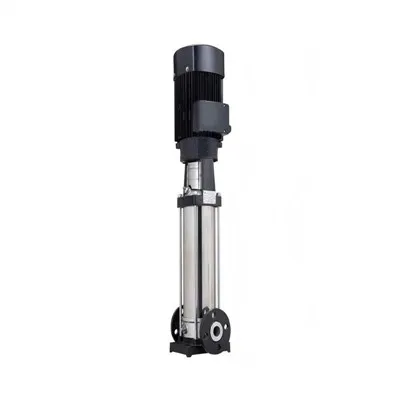
If you’re working on a project now, or planning one, and you’re not sure if your VMP is going to cut it, or you want to pick one that meets all the requirements, don’t waste time guessing. Hit us up to chat through the details—we’ll walk you through every step, no salesy hype, just real advice from people who deal with fire pumps every single day. You don’t want to be the person whose pump fails when it matters most, so get it right the first time.
YE3 Three-Phase Motor References: National Fire Protection Association. NFPA 20: Standard for the Installation of Stationary Pumps for Fire Protection. Underwriters Laboratories. UL 448: Standard for Stationary Pumps for Fire Service. FM Global. Standard 1312: Fire Pumps, Electric and Diesel Engine Driven. National Electrical Manufacturers Association. NEMA MG 1: Motors and Generators.National Fire Protection Association. NFPA 20: Standard for the Installation of Stationary Pumps for Fire Protection. Underwriters Laboratories. UL 448: Standard for Stationary Pumps for Fire Service. FM Global. Standard 1312: Fire Pumps, Electric and Diesel Engine Driven. National Electrical Manufacturers Association. NEMA MG 1: Motors and Generators. Hydraulic Institute. Pump Standard for Centrifugal Pumps.
Taizhou Goodpump Trading Co., Ltd.
We’re well-known as one of the most professional vertical multistage pump enterprises in China, featured by quality products and good service. Please rest assured to buy discount vertical multistage pump in stock here from our factory. For quotation, contact us now.
Address: No. 38, District 6, Zhengye Village, Lunan Street, Luqiao District, Taizhou City, Zhejiang Province, China
E-mail: 19548175755@163.com
WebSite: https://www.goodpump-cn.com/
