If you’ve ever worked in industrial process control, power generation, or petrochemicals, you know compensating cables aren’t just “another wire”—they’re the unsung heroes of accurate temperature measurement, designed specifically to pair with thermocouples to preserve voltage signals that would degrade in standard copper wire. That’s why, when a customer stops by our booth at a trade show or shoots an email asking, “Are compensating cables resistant to moisture?” I never give a one-word answer. It’s a question that cuts to the core of their application, because moisture is one of the most common, underrated causes of thermocouple measurement error— and it’s a mistake that can cost thousands in wasted product, unplanned downtime, or even safety hazards. Today, I’m pulling back the curtain on what we as compensating cables suppliers actually test for, how moisture impacts these specialized wires, and what you need to know to pick the right cable for your environment. Compensating Cables
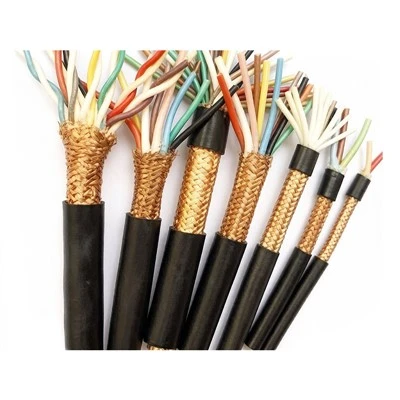
First, let’s get one thing straight: not all compensating cables are created equal. That’s a point I stress to every new client who assumes a cable is just a cable. Compensating cables aren’t the solid-core, PVC-jacketed wire you use to run a power cord or hook up a light; they’re made of alloy pairs that match the thermoelectric properties of specific thermocouple types—Type K, Type J, Type T, Type S, you name it. The whole point is that when you run them from the thermocouple junction to the temperature transmitter or control panel, the cold junction compensation works correctly, so you get an accurate reading. But that precision is fragile if the cable’s insulation and jacket aren’t built to handle the moisture, condensation, or occasional water exposure that comes with most industrial, agricultural, or even outdoor HVAC applications.
Let’s start with how moisture damages compensating cables, because that’s the foundation of everything. Most of our clients forget that the insulation around compensating cable pairs isn’t just for keeping the wires separated—its job is to insulate the thermoelectric junctions of each individual wire from the environment. If moisture gets past the jacket and insulation and touches the alloy conductors, two bad things happen: first, it creates a parallel electrical path between the two conductors. That path siphons off a tiny but critical portion of the millivolt signal the thermocouple produces—think of it like a leak in a water pipe. Over long distances (which are common in plants where thermocouples might be installed on a furnace roof and the control panel is 100 yards away), that signal loss adds up to big temperature inaccuracies. A Type K thermocouple might produce 41 millivolts at 1000°C; if moisture siphons off just 0.5 millivolts, that translates to a 12°C error—enough to make a refinery process run too hot, or a food processing line undercook a batch, leading to waste.
Second, moisture causes galvanic corrosion on the alloy conductors. The alloys used in compensating cables—like chromel and alumel for Type K, or constantan for Type J—are highly sensitive to oxidation and corrosion when exposed to water, especially if there’s even a tiny amount of salt or chemical residue present in the moisture. Corroded conductors change their electrical properties over time: their resistance goes up, their thermoelectric accuracy drops, and eventually, you get intermittent or completely wrong readings. We had a client in the paper mill industry a couple of years back that learned this the hard way. They installed standard PVC-jacketed compensating cables in the press room of their paper machine, where condensation from high humidity was constant. Within six months, their temperature readings were off by 20°C. When they cut open a section of cable, the conductors were pitted and corroded, and the insulation had broken down enough that moisture was bridging the pairs. They thought they had bought “moisture-resistant” cable, but what we later found out was that they’d grabbed generic PVC-jacketed wire meant for indoor use, not the specialized compensating line for high-moisture environments.
Now, the good news: as a compensating cables supplier, we engineer and test our products to resist exactly that kind of moisture damage— but only if you know what labels to look for. Let’s break down the key design features that make a compensating cable moisture-resistant, because not all “moisture-resistant” claims are the same.
First, the inner insulation. Most low-cost compensating cables use PVC insulation, which is cheap and works for dry, indoor applications. But PVC is porous to moisture, especially over time when exposed to temperature swings. For high-moisture environments, we use insulation materials like FEP (fluorinated ethylene propylene) or PTFE (polytetrafluoroethylene). These are non-porous, chemically resistant, and rated for high temperatures—so they don’t break down even when the cable is running at or near the temperature of the thermocouple. In our lab, we test FEP-insulated compensating cables by submerging them in distilled water for 1000 hours, then measuring their thermoelectric accuracy; 98% of them stay within the ±0.5% accuracy range we promise, compared to less than 60% of PVC-insulated cables tested the same way. That’s not just a number— that’s the difference between a reliable reading and a costly failure.
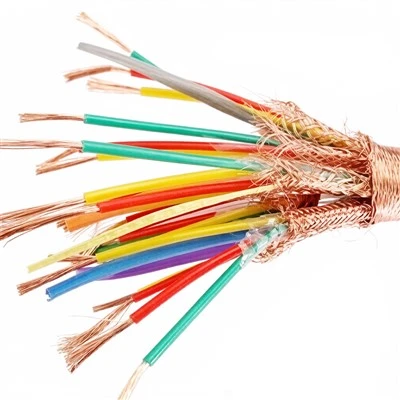
Next, the jacket. This is the first line of defense against external moisture, so it needs to be tough. For applications where the cable might be exposed to direct water, like outdoor temperature monitoring or boiler room installations, we offer jackets made of materials like polyurethane (PU) or cross-linked polyethylene (XLPE). PU jackets are flexible, abrasion-resistant, and completely impermeable to liquid water, even under pressure. XLPE jackets are rigid, chemical-resistant, and work in temperatures up to 150°C, making them ideal for harsh industrial environments where the cable is near hot pipes or machinery. We also add a metallic or polymer-based shield to many of these cables for applications where moisture might be paired with electrical interference—like near power lines or large motors. The shield not only blocks EMI, it also acts as an extra barrier to moisture, so even if the outer jacket gets nicked, the shield keeps water out of the insulation.
But here’s a point most suppliers won’t tell you: even the best insulation and jacket won’t help if the cable is installed wrong. We see this all the time. A client will buy our top-of-the-line moisture-resistant compensating cables, then run them through a wall without sealing the conduit entry point, so water drips down the inside of the conduit and into the end of the cable. Or they’ll leave the ends of the cable exposed in a wet area while they finish installation, letting moisture seep into the conductors before they even connect it to the thermocouple. That’s why we don’t just sell cables—we advise clients on installation best practices: use moisture-sealed conduit fittings, seal all cable ends with heat-shrink tubing or potting compound after connection, and never run compensating cables in the same conduit as power cables, which can generate heat and attract condensation. We even offer a free 15-minute consultation for new clients to walk through their application, so they don’t make those avoidable mistakes.
Wait a second—does that mean all compensating cables are resistant to moisture? No, and it’s important to be clear about the limitations, because honesty is how we build long-term partnerships, not one-off sales. If you’re running a thermocouple in a dry, climate-controlled lab, standard PVC-compensating cable will work fine, even if it’s “moisture-resistant” in name. But if you’re working in a location that sees frequent condensation, spray water, high humidity (above 70% relative humidity, to be precise), or direct immersion in liquid, you need to specify a cable rated for wet environments. That’s not just a suggestion—it’s a requirement. We recently had a client in the seafood processing industry that needed compensating cables for their freezing tunnels, which are kept at -40°C and exposed to constant salt spray and defrost water. They tried using a standard FEP-jacketed cable and had failures every three months, because the salt spray ate through the jacket over time. When they switched to our XLPE-jacketed compensating cables, which are rated for salt spray resistance, they haven’t had a failure in two years. That’s the kind of result we care about, because it means our products are actually solving a problem, not just checking a box.
I also want to address a common myth: people think that once a compensating cable is dry, it’s fine again if it gets wet. That’s not entirely true. If a small amount of moisture gets trapped in the insulation, it can cause intermittent errors for weeks after the cable dries out, because the water creates tiny conductive paths that only appear when the humidity is high, or when the temperature changes. Corrosion is even worse—once moisture causes pitting on the conductors, that damage is permanent, and the cable will never return to its original accuracy, even if it’s dried out. That’s why proactive selection of a moisture-resistant cable is so much cheaper than replacing a failed system, or paying for the downtime when your temperature readings are wrong and you have to shut down a process to troubleshoot.
As compensating cables suppliers, we also update our products based on what our clients need. Five years ago, most of our moisture-resistant cables were built for extreme industrial environments. Now, we’re making lines tailored for newer applications: like EV battery manufacturing plants, where temperature sensors run along assembly lines that are occasionally cleaned with high-pressure water, or renewable energy farms, where thermocouples are installed on solar panel arrays or wind turbine blades exposed to rain and dew. We test every batch of these cables in our in-house environmental chamber, which can simulate temperatures from -60°C to 200°C, and humidity up to 95% RH, so we know exactly how they perform before they leave our facility.
At the end of the day, when a client asks, “Are compensating cables resistant to moisture?” the answer is: the right compensating cables are. The key is to pick a product that’s designed for your specific environment, not just the cheapest one on the market. If you’re not sure which cable is right for you, don’t guess—reach out to our team. We’ve got decades of experience working with clients in every industry, from oil and gas to food and beverage, and we can help you pick a cable that will hold up to your conditions, avoid costly errors, and keep your temperature measurements accurate. You don’t have to navigate the technical specs alone; we’re here to help, whether you need a single spool for a small project or enough cable to wire an entire plant. Don’t let moisture derail your next temperature measurement project—connect with our team to discuss your requirements today.
Flat Cables References
- Thermocouple Compensating Cables: Selection, Installation, and Maintenance, ISA (International Society of Automation), 2021
- Corrosion Resistance of Thermocouple Alloys in Humid and Chemical Environments, NACE International, 2019
- Electrical Signal Attenuation in Compensating Cables Exposed to Moisture, Journal of Process Control, Volume 58, 2017, Pages 112-119
- Environmental Rating Standards for Industrial Cables, Underwriters Laboratories (UL) 2021, Standard 835
Anhui Yuantong Cable Co., Ltd.
As one of the most professional compensating cables manufacturers and suppliers in China, we offer a wide range of cables with superior quality. Please feel free to wholesale bulk customized compensating cables from our factory. Also, pricelist is available.
Address: Yongfeng Industrial Park, Tianchang City, Anhui Province
E-mail: ahytcable@126.com
WebSite: https://www.yuantongcable.net/
