If you’re in the water treatment space—whether you’re a plant manager, a field engineer, or someone just getting their feet wet with reverse osmosis (RO) systems—you’ve probably heard SWRO (Seawater Reverse Osmosis) and BWRO (Brackish Water Reverse Osmosis) thrown around a lot. But if you’re an equipment supplier like me, I get a ton of questions from folks who want to know: “What does it actually take to run these systems day in and day out?” It’s not just pressing a button and walking away, let me tell you. Over the years, I’ve worked with small coastal desal plants, rural water supply hubs, and even offshore rigs that run these systems, and I’ve seen first-hand how the right labor mix (and the wrong labor mix) can make or break a project. SWRO & BWRO Equipment
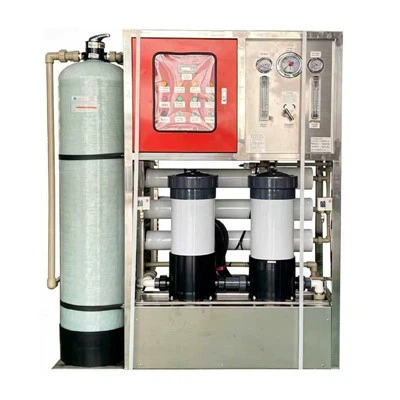
First, let’s break down the core labor needs into two main buckets: regular daily operations and long-term maintenance. Most people only think about the day-to-day stuff, but the maintenance side is where you avoid costly downtime. Let’s start with daily ops because that’s the first stop for any SWRO or BWRO system.
For a basic, mid-sized SWRO plant (say, 5,000 to 20,000 gallons per day, or GPD), you don’t need a whole team of 10 people. But you do need at least one full-time operator on shift at all times, 24/7. Wait, why 24/7? Seawater can be super unpredictable—one hour the salinity spikes from a storm runoff, the next the feed water pressure drops because a pipe clogged, and your permeate quality (that’s the clean water coming out) could tank if someone doesn’t catch it fast. On shift, that operator’s job isn’t just staring at a screen. They’re doing routine checks: walking the plant, listening for weird pump noises, checking the feed water intake screens for debris (like seaweed or small fish that can get sucked into the pre-filters), and logging data every hour. What kind of data? Feed pressure, permeate flow, salt rejection rate, pH levels—all the numbers that tell you if the system is working like it should. For BWRO systems, which run on shallower, lower-salinity water like groundwater or river water, the daily ops are a little less intense, but you still need someone checking in once a shift, especially if the water source has high levels of iron or hardness that can mess up the membranes.
But wait, what if you have a smaller system—like a 1,000 GPD unit for a remote resort or a small coastal community? You don’t need a dedicated full-time operator 24/7. You can get by with a part-time, on-call person who can swing by twice a day to run checks, and a local tech who can handle emergencies if something breaks. That’s where matching labor to the system size is key—no one wants to pay for a full-time shift operator for a tiny setup.
Now, the maintenance side is where things get more specific, and this is where a lot of new customers come to me unprepared. SWRO membranes are the heart of the system, right? They’re super sensitive—if the water isn’t pre-treated right, they’ll get fouled (slime, scale, or debris built up on them) way faster than they should. So you need two types of maintenance: routine preventive and corrective (fixing something that broke).
Preventive maintenance is non-negotiable for SWRO. Every 1 to 3 months, depending on how dirty the feed water is, you need to do a membrane cleaning. That’s not a job you can just assign to a random handyman. You need someone who knows the right chemicals to use—for example, if the fouling is mostly organic from seawater, you use a low-pH cleaning solution; if it’s mineral scale, you use a different one. Mess this up, and you can destroy the membranes, which are like $500 to $1,000 each, depending on size. For BWRO, membrane cleaning is a little less frequent—every 3 to 6 months—since brackish water has less gunk than seawater, but same rule applies: you need a tech who knows their RO chemistry.
Then there’s the bigger stuff: replacing pre-filters, pressure vessels, high-pressure pumps, and control valves. Pre-filters (usually 5-micron or 1-micron cartridge filters) need to be changed every 1 to 4 weeks, again depending on feed water quality. That’s a straightforward job, but you still need someone who can swap them out without breaking the O-rings—leaks here can let debris get to the membranes, which is a whole other problem. High-pressure pumps for SWRO run at 800 to 1,000 PSI, so they have moving parts that wear out—seals, bearings, impellers. Every 1 to 2 years, you’re looking at a full pump overhaul, which needs a trained technician, not a general laborer. For BWRO pumps, which run at lower pressure (200 to 400 PSI), the overhaul cycle is a little longer, but still, it’s not a DIY job.
Let’s not forget about specialized roles that might come up, depending on the project. For large-scale SWRO plants (100,000 GPD and up)—the kind that supply a whole city’s water—you need a plant supervisor, a RO process engineer, and even a water quality specialist. The supervisor manages shifts, coordinates maintenance, and deals with regulatory stuff (since most desal plants have to meet strict local water quality standards). The process engineer tweaks the system’s settings—like pressure or chemical doses—to maximize efficiency and keep salt rejection above 99% for SWRO, which is the industry standard. The water quality specialist tests the permeate regularly to make sure it’s safe to drink, especially if the plant is in a place with high levels of boron or other contaminants that RO doesn’t always catch on its own. For offshore operations, like oil rigs that run BWRO for drinking water, you also need a rig-based tech who can handle the constant vibration and harsh marine environment that takes a toll on equipment.
I’ve seen customers cut corners on labor before, and it never ends well. A few years back, I worked with a small resort in Florida that bought a cheap SWRO unit, and they tried to have their part-time handyman do all the maintenance. He didn’t know how to clean the membranes, so after 6 months, the salt rejection dropped to 90%—way too low, so the resort had to buy bottled water for their guests for a week, which cost them way more than hiring a trained tech would have. Another one: a rural community in Mexico that ran a BWRO system, and they didn’t have anyone checking the pre-filters. A clogged filter made the pump run dry, which burned out the pump’s seals, and they had to wait 3 weeks for a replacement because the local shop didn’t have it in stock. That’s 3 weeks without clean water—terrible for a small community.
Now, let’s talk about how to build the right labor team, depending on your system type and size. For small SWRO/BWRO setups (under 5,000 GPD): 1 part-time operator (on-call, 10-15 hours a week for checks) + 1 trained maintenance tech (on contract, 4-8 hours a month for filter swaps and small cleanings) + 1 emergency contact (your equipment supplier, since we’re usually on call for urgent fixes). For mid-sized systems (5,000 to 50,000 GPD): 1 full-time shift operator + 1 part-time maintenance tech + quarterly check-ins from a RO specialist (like me, if you work with us, to make sure everything’s running right). For large-scale plants (over 50,000 GPD): 2-3 shift operators + 1 full-time maintenance manager + 1 process engineer + monthly water quality testing by a third party.
Wait, also a quick note on remote monitoring—lots of new systems come with remote dashboards now, so you don’t have to be on site 24/7. But even with that, you need someone who can log in, check the alerts, and fix small issues before they become big ones. Remote monitoring is great, but it’s not a replacement for on-site checks. I’ve had customers tell me their dashboard said everything was fine, but when a tech showed up, they found a leak in the pressure vessel that was causing 10% of the permeate to be lost. The dashboard didn’t flag that because it was a small, slow leak—only a human on site would catch that.
Another thing: training. A lot of new customers don’t realize that most equipment suppliers (including us) offer on-site training for their operators and techs. That’s a huge part of the labor requirement—you can’t just throw a piece of equipment at someone and expect them to know how to run it. For SWRO specifically, training needs to cover things like pre-treatment checks, membrane cleaning protocols, and emergency shutdown procedures (like if the feed water salinity spikes suddenly). For BWRO, training focuses more on hard water scale prevention and handling iron contaminants that are common in groundwater.
Let me wrap this up with a few key takeaways, because I know it’s easy to get overwhelmed. First, labor for SWRO/BWRO systems isn’t one-size-fits-all—match the team size to your system’s GPD and the quality of your feed water. Second, preventive maintenance is way cheaper than corrective maintenance or replacing ruined membranes/pumps. Third, don’t skimp on training—we’ve seen too many avoidable problems because someone didn’t know what they were doing.
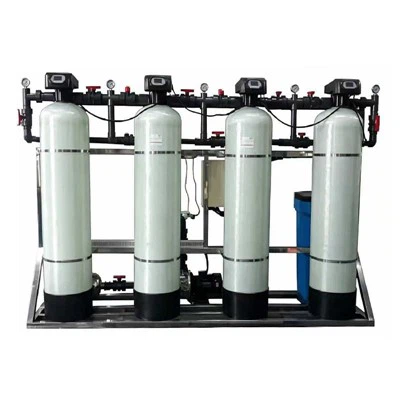
If you’re in the market for SWRO or BWRO equipment, and you’re still figuring out how much labor you’ll need, or if you want to make sure your current team is up to snuff, don’t hesitate to reach out. We can walk you through your specific setup, give you a clear breakdown of the labor needs, and even offer training to get your team up to speed. It’s way better to plan ahead than to deal with costly downtime later.
RO Purified Water Equipment References:
- Water Research Foundation. (2021). Operational and Maintenance Best Practices for Seawater Reverse Osmosis Systems.
- World Health Organization. (2019). Reverse Osmosis Technology for Small-Scale Water Supply: Labor and Training Requirements.
- American Water Works Association. (2020). BWRO System Operation: Personnel and Maintenance Guidelines.
- Desalination Water Purification International. (2022). Mid-Scale SWRO System Labor Requirements for Remote and Coastal Applications.
Shandong Yanuo Environmental Protection Equipment Co., Ltd.
We’re well-known as one of the leading swro & bwro equipment manufacturers and suppliers in China, featured by quality products and good price. Please rest assured to buy bulk swro & bwro equipment made in China here from our factory. Customized orders are welcome.
Address: North Side of the Road, 1,000 Meters West of the Intersection of Fenghuangshan West Road and Provincial Highway S102, Wangfu Subdistrict, Qingzhou City, Weifang City, Shandong Province.
E-mail: ynhb.499973983@gmail.com
WebSite: https://www.zkyaruo.com/
